

Okay, real talk, how many times have you opened Netflix this year, scrolled through the rom-com section, and quietly closed it because nothing looked worth your two hours? Same. The genre has been on a slow, painful slide into algorithmic mediocrity for a while now, and most of us have made peace with lowered expectations. So when I tell you that Voicemails for Isabelle genuinely surprised me, I need you to understand the weight of that statement.
This isn’t me hyping up a Netflix original because it technically had a plot and good lighting. This is me telling you that I sat down expecting a perfectly serviceable, mildly charming romantic comedy and instead got a film that had me actually feeling things. The ugly-cry kind of things. The “okay let me just watch the ending one more time” kind of thing.
Grief, laughs, and Zoey Deutch being absolutely magnetic – Voicemails for Isabelle is the genre’s most emotionally ambitious outing in years. And here’s what sets it apart from the mountain of Netflix rom-coms that came before it: writer-director Leah McKendrick doesn’t use grief as a decoration. She puts it right at the centre of the story and builds everything – the romance, the humour, the awkward meet-cute around it. That’s a risky move. It pays off. Is the film perfect? No. But is it one of the most genuinely moving rom-coms to hit any streaming platform this year? Without a doubt.
Quick Verdict
Put it on your watchlist right now. No, seriously.. go do it first and then come back. Writer-director Leah McKendrick threads grief through a genre that usually pretends it doesn’t exist and the result is a film that earns every tear and every laugh in a way that very few Netflix originals do this year. If you’re looking for another 2026 film that swings bigger than expected, our Devil Wears Prada 2 review is worth your time next. Zoey Deutch and Nick Robinson have the kind of chemistry that makes even the most familiar genre beats feel fresh, and the kind of story that will stay with you well after the credits roll.
- JWS Rating: ⭐ 4/5 Stars
- Where to Stream: Netflix (Streaming now)
- Binge-Worthiness: High, one sitting, keep the tissues close
The Plot Premise
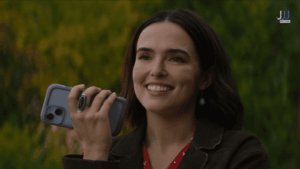
Here’s the thing about Voicemails for Isabelle, it’s actually two love stories crammed into one beautifully messy film. The first one is the one that will gut you: the sibling bond between Jill (Zoey Deutch) and her younger sister Isabelle (Ciara Bravo), who has spent her whole life battling cystic fibrosis. When Isabelle dies unexpectedly early in the film, Jill does the only thing that makes sense to her. She keeps talking. She keeps leaving voicemails – rambling, brutally honest, sometimes deeply embarrassing audio diaries about her chaotic life as an aspiring pastry chef in San Francisco. It’s her grief, out loud, in real time. And it works because you understand it immediately.
Now here’s where it gets complicated and honestly, where the film becomes interesting. That phone number? It’s been reassigned. Wes (Nick Robinson), a real estate agent back in Austin, has accidentally become the keeper of Jill’s most private confessions. Her terrible dates, her nightmare boss, her grief – all of it, delivered directly to a stranger’s phone. And he’s fallen for the voice behind all of it. He engineers a meet-cute. She has absolutely no idea who he is or what he knows. If you feel a little uncomfortable reading that, good – that means the film is doing its job.
Character Arcs & Standout Performances
Let me be direct with you: Zoey Deutch is the whole film. Full stop. She’s been the most reliable rom-com lead in the streaming era, Set It Up proved it, Someone Great confirmed it and here she reaches a new level. Jill is not your typical quirky-girl-in-a-big-city archetype. She is a person who is actively, visibly broken, trying to hold her life together with baking flour and bravado. Deutch carries that grief constantly and quietly, underneath the jokes, underneath the charm. It never lets you forget what the film is really about. If you go in expecting the breezy Deutch you remember from her earlier work, give it twenty minutes and then prepare to be caught off guard.
Nick Robinson as Wes has a harder job than it looks. He’s being asked to make you root for someone who is doing something objectively questionable, listening to private voicemails and then building a relationship on that secret knowledge. Robinson keeps Wes from crossing into creepy territory by playing him as completely, almost painfully earnest. The film even pokes fun at the You’ve Got Mail comparison directly, winking at the audience about how strange the premise actually is. Whether you fully buy his arc will depend on how much slack you give the genre. Personally, Robinson made me lean toward forgiving and that’s not a small achievement.
Ciara Bravo as Isabelle is not just a plot device, and I cannot stress that enough. Too many films in this space kill a character off to give the lead something to feel sad about and move on. McKendrick refuses to do that. Through flashback sequences, Izzy is built into a complete, vivid human being – funny, warm, a little chaotic. The sibling dynamic between Deutch and Bravo has an easy authenticity to it that makes the loss feel genuinely earned rather than manipulative. When the grief hits, it hits because you’ve actually met the person being mourned. That’s rare.
The supporting cast absolutely deserves a mention here. Nick Offerman plays Chef Bastien, Jill’s kitchen tyrant boss with magnificent, cartoonish intensity. He’s the film’s pressure-release valve, and every scene he’s in is funnier than it has any right to be. Lukas Gage plays the kind of man Jill dates in her grief spiral, the sort of terrible romantic choice that will have you quietly auditing your own past decisions. Harry Shum Jr. as Andy gets less to do but brings warmth to every scene he’s in. And Leah McKendrick herself pops up as Breeda, Andy’s wife, she knows this story from the inside, and it shows.
Direction, Screenplay & Technical Execution
I’ll admit, I didn’t expect McKendrick to direct with this kind of confidence on a project of this scale. She’s working with a 118-minute runtime, two cities, a grief storyline, and a romantic premise that could have gone sideways at multiple points. And she holds it together. The San Francisco sequences have a lived-in visual texture that makes the city feel like a character, not a postcard. Yes, the film was actually shot in Vancouver, a fact that becomes somewhat impressive once you notice how convincingly it doubles for both San Francisco and Austin.
The screenplay is where the film really earns its distinction, and here’s some context for you: this was a Black List script, meaning it made Hollywood’s annual list of the best unproduced screenplays before McKendrick took it to the screen herself. That pedigree is visible in every scene. The dialogue moves fast, the humour has specificity (Jill describing a man she’s sleeping with as “neurospicy” is peak millennial rom-com writing, and you will laugh out loud), and crucially, the emotional beats don’t feel like they were engineered in a writers’ room to manufacture tears.
McKendrick knows when to be funny. More importantly, she knows when to stop being funny, a discipline that eluded other 2026 rom-coms entirely. If you want to see what happens when the genre plays it too safe, our Ginny Wedss Sunny 2 review is the cautionary tale.
Can we talk about the soundtrack for a second? Because it deserves its own paragraph. Robyn’s “Dancing on My Own” runs through the film as its emotional spine, a clever choice, since that song is already culturally coded for both heartbreak and catharsis, and the film makes you feel both simultaneously by its end. The needle drops throughout are impeccably chosen: “Electric Love”, “Boys Wanna Be Her”, Taylor Swift’s “Marjorie”, a song literally written about grief and memory, if you didn’t know that already. Whoever was in charge of music supervision here understood the assignment completely.
Where the film wobbles and I want to be honest with you about this, is the second act. There’s a stretch around the midpoint where the romantic obstacle feels more constructed than organic. You’ll feel it. It’s the genre’s original sin: the moment where everyone in the room knows the couple is going to reconcile, but the film still has to go through the falling-out. Voicemails for Isabelle doesn’t escape it. The emotional logic holds, but the plot logic gets a little wobbly. It’s not enough to derail the film, but it’s enough to notice.

The Critical Breakdown
What Hits the Mark
- Zoey Deutch’s performance – one of the finest rom-com leads in recent streaming history
- The sister relationship is built with real care; Isabelle never feels like a storytelling prop
- Soundtrack is exceptional – Robyn, Taylor Swift, and more land with perfect emotional precision
- Self-aware about its own tropes – the ‘You’ve Got Mail’ comparisons are acknowledged, not buried
- McKendrick’s dialogue crackles with specificity and humour that doesn’t feel workshopped-to-death
- Nick Offerman’s Chef Bastien is a comedic highlight the film desperately needed
What Misses the Mark
- Second-act pacing sags – the midpoint obstacle feels genre-obligatory rather than emotionally earned
- Wes’s premise is ethically murky – the film doesn’t fully wrestle with the fact that he’s been listening to private audio diaries for weeks
- Some supporting characters are underwritten – Gage’s terrible-guy role is mostly surface
- Nearly two hours is slightly long for a genre film; ten minutes could have been trimmed without loss
- Predictability – if you’ve seen You’ve Got Mail or Love Again, the broad strokes are visible from the first act
Comparison With Other Rom-Coms
| Film | Narrative Depth | Pacing | Chemistry | Emotional Weight | Platform |
| Voicemails for Isabelle (2026) | ★★★★ | ★★★½ | ★★★★★ | ★★★★★ | Netflix |
| You’ve Got Mail (1998) | ★★★★ | ★★★★ | ★★★★★ | ★★★½ | Amazon Prime Video |
| Love Again (2023) | ★★★ | ★★★ | ★★★½ | ★★★ | Netflix |
| Set It Up (2018) | ★★★½ | ★★★★ | ★★★★ | ★★★ | Netflix |
| Love, Simon (2018) | ★★★★½ | ★★★★ | ★★★★ | ★★★★ | — |
Quick-Reference Stats
Title: Voicemails for Isabelle
Release Date: June 19, 2026
Platform: Netflix
Runtime: 1h 58m (118 minutes)
Rating: PG-13
Genre: Romantic Comedy
Director & Writer: Leah McKendrick
Lead Cast: Zoey Deutch, Nick Robinson, Ciara Bravo
Supporting Cast:Nick Offerman, Lukas Gage, Harry Shum Jr., Gil Bellows, Spencer Lord
Production: Escape Artists / Sony Pictures Releasing
Black List Script: Yes, the screenplay was a Black List selection
Final Verdict
Watch it, and watch it with someone you love. Voicemails for Isabelle is the rare Netflix film that genuinely feels like it was built for a cinema – big emotions, a knockout soundtrack, and a lead performance that deserves far more than a streaming thumbnail. It’s the same problem we flagged in our Kartavya 2026 review, some performances are simply too large for an algorithm to do justice to.
It doesn’t reinvent the rom-com. It does something arguably harder: it reminds you why the genre mattered in the first place. If you’ve been sitting on your couch this summer wondering whether anything on Netflix is worth two hours of your actual life, this one is. The grief is real, the laughs are real, and Zoey Deutch has never been better.
Hot Take: The film’s central ethical tension, Wes listening to those voicemails for weeks is the most interesting thing about it, and the screenplay consistently sidesteps engaging with it directly. Jill’s eventual forgiveness arrives too easily. A braver version of this story would have given that betrayal five more minutes of screen time. The film is charming enough that you’ll overlook it. But it’s worth noting that McKendrick wrote herself a more comfortable ending than the premise deserved.
For more reviews of romantic and dramatic films on streaming, explore our Movies and Series archive or browse our complete Web Series Reviews section.




Frequently Asked Questions (FAQs)
Will there be a Season 2 or Sequel to Voicemails for Isabelle?
As of June 2026, no sequel to Voicemails for Isabelle has been announced. The film was produced as a standalone movie, and its ending does not set up further stories.
Why is everyone talking about the ending of Voicemails for Isabelle? (Spoiler-free context)
The film's final sequence which involves a spontaneous moment that feels like a sign from Isabelle has struck an enormous emotional chord with audiences and is being widely discussed for its combination of romantic payoff and grief catharsis.
Does Voicemails for Isabelle have a post-credits scene or post-season teaser?
Voicemails for Isabelle does not feature a post-credits scene. The film wraps its narrative cleanly in its final sequence and does not tease a sequel or follow-up project.
Where was Voicemails for Isabelle filmed? (Filming locations explained)
Principal photography for Voicemails for Isabelle took place in Vancouver, Canada, beginning in July 2025, with the city standing in for the film's story locations of San Francisco and Austin, Texas.
Is Voicemails for Isabelle based on a true story or a book?
The film is not based on a book or a real event, but director Leah McKendrick has confirmed that personal experience, including her own sister relationship and a stand-up comedy set she performed about mortality, directly inspired the screenplay, which was a Black List selection before reaching Netflix.



 Netflix
 Prime Video
 JioHotstar
 SonyLIV
 ZEE5
ZEE5 MX Player