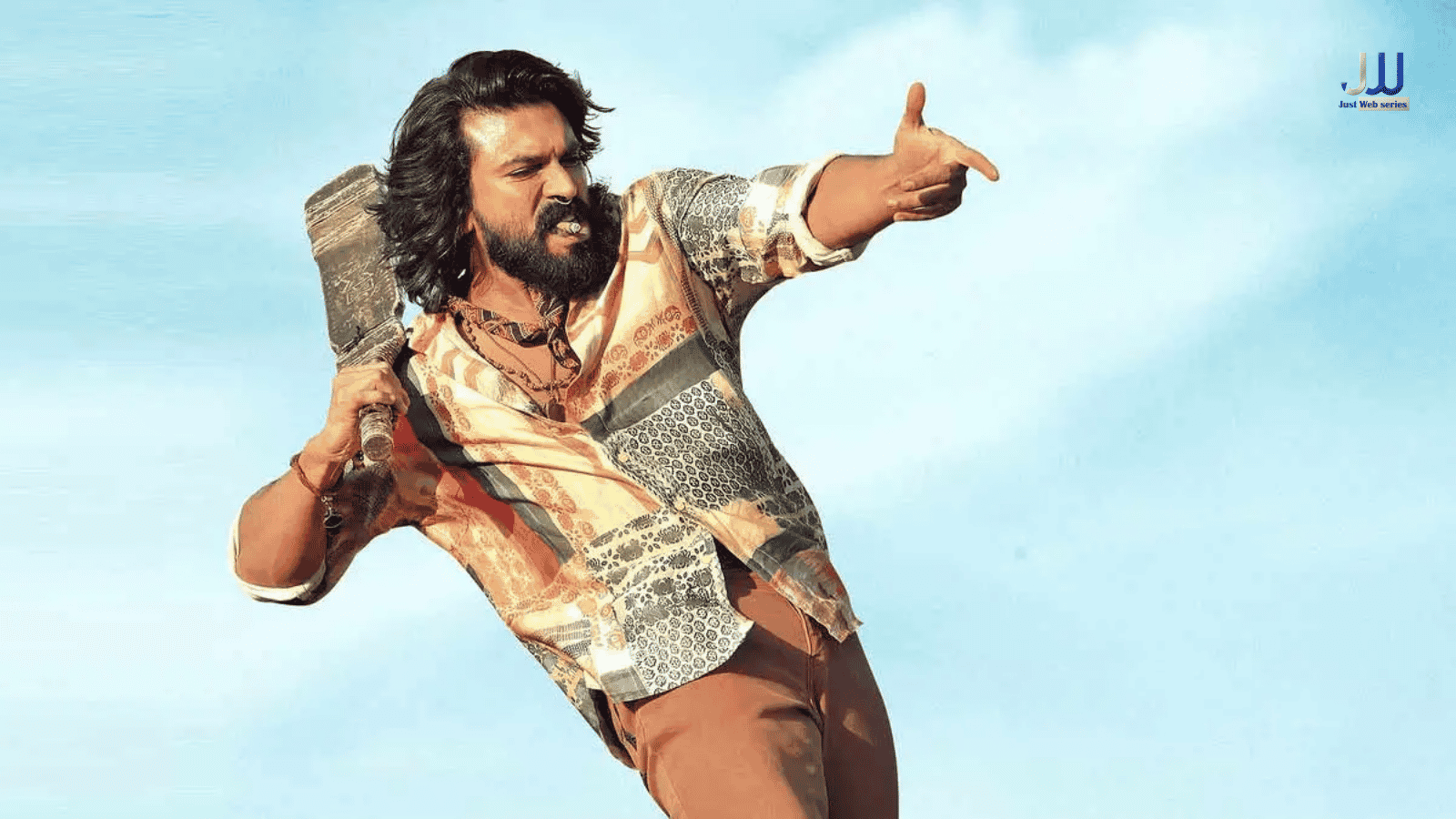

If you walked out of Peddi with a lump in your throat and a head full of questions, you’re not overthinking it. Buchi Babu Sana doesn’t do tidy endings, and this film earns every tear it pulls out of you. If you haven’t caught up on what critics were saying before release, our Peddi early review tracks the insider buzz that preceded it. The Peddi ending explained is not about winning a gold medal. The medal is almost incidental. What the film is really doing in those final thirty minutes is asking something brutal: how much of yourself do you destroy to make a system notice you exist?
That’s the gut-punch. Peddi – the “aata coolie” from a nameless village near Vizianagaram doesn’t sacrifice his career for glory. He sacrifices his leg, his body, his entire athletic identity, just to force a government to write his village’s name on a map. The ending is the logical and devastating conclusion of everything the film sets up. Once you understand what’s driving it, it lands completely differently.
This article breaks down the full Peddi climax explained, from the amputation decision to the railway station naming, the Peddi final twist, what Appalasoori’s arc means, whether there’s a post-credit scene, and whether a sequel is coming.
Peddi Ending Explained in Short: Peddi amputates his injured leg to reinvent himself as a para-athlete, wins gold at the 1996 Para Asian Games, and uses that platform to publicly shame the government into recognizing his unnamed village. The village finally gets a railway station, named Appalavalasa, after Appalasoori, who spent 30 years fighting for it. No sequel is confirmed. The film ends as a complete story.
The Setup – A Village That Doesn’t Exist
Peddi (Ram Charan) comes from a settlement near Vizianagaram known only as “konda kinda uru” roughly, “the place under the hills”, because it has no official name. No name means no identity cards. No identity cards means no right to vote. No voting rights means no politician has any reason to care. The village has no railway halt despite a train line running right past it. Appalasoori (Jagapathi Babu) has spent thirty years walking into government offices, filing requests, writing letters, all to get the train to stop for one minute. He’s been ignored for three decades.
My take: This setup is where Peddi distinguishes itself from every other Telugu sports film. The central problem isn’t a villain, a rival, or a corrupt politician in the usual sense. It’s bureaucratic invisibility. The village is nameless not because anyone is actively persecuting it, it’s nameless because nobody bothered to give it a name. That particular kind of cruelty, the cruelty of indifference, is harder to dramatize than outright oppression, and Buchi Babu Sana makes it land. Jagapathi Babu’s Appalasoori is the moral spine of the movie. Every scene he’s in, you understand the weight of generational defeat.
Why this matters: The village’s lack of a name isn’t backstory. It’s the entire engine of the film and it’s what separates Peddi from the conveyor belt of Telugu dramas that use sport as decoration. Everything Peddi does, every sport he takes up, every sacrifice he makes is in service of one goal: making the state acknowledge these people exist. Keep that in mind as the film escalates, because the ending only hits as hard as your investment in this foundational injustice.
The Betrayal / Inciting Incident – Cricket, Politics, and Getting Humiliated
Peddi earns his living as an “aata coolie”, a player to hire and his cricketing talent makes him the most sought-after player in the region. He plays for Rambujji (Divyenndu), a wealthy youth with political connections. When Peddi falls for Achiyamma (Janhvi Kapoor), the daughter of a rival political family, and defends her from Rambujji’s men during a campaign incident, the fallout is swift. Rambujji uses his connections to humiliate Peddi on the cricket field, engineering a situation where the player-for-hire is publicly disgraced. The same system that exploited Peddi as cheap sporting labor turns on him the moment he stands for something.
My take: Divyenndu is criminally wasted here, his Rambujji starts with real menace, if you want to see him at full throttle, his other work is worth tracking in our movie reviews section. The film essentially forgets to resolve his arc. That’s a genuine screenwriting flaw. But the function of his character works: he represents how sporting talent from the margins is consumed by the powerful and discarded when inconvenient. Peddi is a tool until he stops being a useful one. The cricket betrayal is the moment Peddi has to stop playing for whoever pays the most and decide what he’s actually fighting for.
Why this matters: This humiliation is the pivot. Gournaidu (Shiva Rajkumar), who runs an akhada nearby, witnesses Peddi’s athletic gifts and invites him to train in wrestling. The shift from cricket to wrestling is not just a career change, it’s Peddi moving from a sport where he was someone else’s property to one where his body is his own weapon. The village’s lack of a name is the engine of the film and it’s what separates Peddi from the conveyor belt of Telugu dramas that use sport as decoration.
The Wrestling Arc – Learning to Fight for Something Real
Peddi entered the world of traditional wrestling under Gournaidu’s mentorship. He excels because of course he does, this is a commercial Telugu film but more importantly, he starts building a name for himself that draws attention beyond the village circuit. His sporting achievements begin to create a platform that mere farming and factory work never could. As his reputation grows, a rival wrestler, Veerabhadra (Tarak Ponnappa), who once owned the regional sporting spotlight, sees Peddi as a threat. Their confrontation builds to a brutal final match that changes Peddi’s life permanently.
My take: Shiva Rajkumar brings genuine gravitas to Gournaidu, even though, like several supporting characters here, his arc ends more abruptly than the character deserves. The wrestling sequences are well-staged. But the real reason this section works is tonal: Buchi Babu is quietly shifting the film from mass-entertainment cricket sequences to something rawer and more physical. By the time we reach the injury, we’ve invested in Peddi’s body as the one thing he owns.
Why this matters: The wrestling world is where the Peddi final twist is seeded. Peddi’s injury in the Veerabhadra confrontation isn’t just a dramatic setback, it’s the moment the film strips away every conventional path to success and forces Peddi to find something no one else would choose.
The Delhi Episode – Isolation and the Breaking Point
A significant portion of the second half takes Peddi to Delhi, away from familiar surroundings. The Delhi episode is meant to be a crucible, Peddi isolated, trying to navigate a system even more indifferent than the local bureaucracy, pushing for recognition through different sporting channels. The emotional intensity the film aims for here doesn’t fully land, multiple reviews note the Delhi stretch lacks the emotional weight it needed but it’s structurally essential because it exhausts every conventional avenue.
My take: This is the film’s biggest missed opportunity. The hospital scene that follows it, by contrast, contains some of Ram Charan’s finest acting, the moment where doctors tell him his leg injury is permanent, that his competitive career is over, and you watch everything that Peddi has built simply collapse across Charan’s face. That scene earns its reputation. But it would have hit even harder with a stronger Delhi buildup.
Why this matters: The hospital scene is the floor. Everything beneath that scene, the injury, the diagnosis, the destroyed future, is what Peddi stares into before making the decision that defines the Peddi ending explained. He doesn’t spiral into despair. He watches para-athletes training and sees a door, which is something the best South Indian films of the year have been doing more fearlessly than their Hindi counterparts.
Appalasoori’s Role – The Man Who Carried the Weight First
Jagapathi Babu’s Appalasoori is the film’s moral anchor throughout. He’s spent thirty years approaching every government office, every babu, every neta, with the same simple request – a railway halt, an official name for the village, some acknowledgment that these people exist. He’s been dismissed, patronized, and simply ignored. His exhaustion is written into his body. When Peddi takes up the cause, Appalasoori doesn’t hand him a torch in any ceremonial way, Peddi simply cannot watch the older man be defeated.
My take: Jagapathi Babu does the best work in the film outside of Ram Charan. There’s a particular quality to how he plays dignity in defeat – never pitiable, never melodramatic, just tired and still going. His Appalasoori is every person who ever filed a government form and waited, and waited, and waited. The film earns its emotional climax specifically because Appalasoori’s thirty years of failure front-load the stakes. When the railway station is finally named after him, it matters because we’ve watched what thirty years of being invisible does to a man.
Why this matters: The Appalavalasa naming at the end is the real climax, not the gold medal. Understanding Appalasoori’s arc is what separates the Peddi ending explained from a simple “underdog wins” reading.
The Final Twist – Peddi Ending Explained in Full
Peddi amputates his injured leg, wins gold at the 1996 Para Asian Games, and uses the medal ceremony as a live press conference, pointing out to the world that he cannot truly be called Indian because his home doesn’t officially exist.
After the devastating diagnosis, Peddi watches para-athletes compete and makes a decision that would be unthinkable for most people and is simply logical for him: he chooses to amputate the damaged leg and train with a prosthetic running blade. The film frames this not as self-destruction but as the last tool available. Every other path – politics, petitions, protest has failed the village for generations. Sporting glory at the national level was getting attention. Para-sport on the global stage would get more.
He trains. He competes. He won gold at the 1996 Para Asian Games.
And then, at the moment when the spotlight is brightest, he doesn’t celebrate. He speaks. He tells the audience and the authorities watching that he cannot be truly identified as Indian, cannot be properly documented or officially located because the place he comes from has no name on any government record. The village does not exist in any administrative sense. A gold medalist from a place that officially doesn’t exist.
That’s the lever. That public statement, on that platform, creates the political pressure that decades of Appalasoori’s petitions couldn’t. The government finally moves. The village gets infrastructure. It gets a name. And the railway station – the specific, decades-long dream of Appalasoori is named Appalavalasa, as both tribute and apology.
Here’s what the final scene tells us:
- The gold medal was never the goal, it was the microphone
- The system responds to shame, not to justice – a pointed, uncomfortable truth
- Appalasoori’s thirty years of work made Peddi’s sacrifice meaningful without the history, the gesture is empty
- Peddi’s last line – “Malli pudatama enti?” (“Will we be born again?”) isn’t the kind of question a Bollywood news cycle usually makes space for. It’s what makes Peddi worth the conversation.

What Really Happened: The Subtext Unpacked
The film is about how a system only notices the marginalized when they make themselves inconvenient to ignore.
Peddi belongs to a lower-caste community, the film is explicit about this, anchoring the village’s invisibility in caste-based exclusion, not just geographic remoteness. No identity documents, no voting rights, no political leverage: these aren’t administrative oversights. They’re the predictable results of a hierarchy that doesn’t consider certain people worth counting. The village is nameless because naming it would mean acknowledging the people in it.
What Buchi Babu Sana is doing throughout is charting every legitimate path to recognition and showing it fail. The political process fails, no votes, no voice. Direct petition fails, Appalasoori’s thirty years prove that. Local sporting fame fails, attention without leverage is just spectacle. What finally works is international visibility combined with public shame. The government doesn’t respond to Peddi’s humanity. It responds to the optics problem he creates.
That’s not a hopeful reading. That’s a scathing one. The film is careful to frame it as triumphant, and emotionally it earns that framing but the subtext is that dignity shouldn’t require a gold medal and a public callout. The fact that it did is the wound the film doesn’t let you ignore.
The amputation itself carries this weight double. Peddi doesn’t lose his leg to a villain’s attack. He chooses to remove it because a working leg, in his circumstances, had no more value to give. Only a missing leg – retrained, redirected, weaponized in para-sport could accomplish what he needed. The body is a sacrifice, not just an instrument. That’s a more complex and disturbing thing than any conventional hero’s journey.
Peddi’s Final Choice – What He Comes Home To
After the gold, after the speech, after the village gets its name and its railway station, the film closes with Peddi living peacefully in Appalavalasa, the newly named village. He’s settled, surrounded by the life and the people he fought for. The closing image has him turn to the audience and deliver his signature line: “Malli pudatama enti?”
My take: It’s the right ending. The film resists the temptation to give Peddi a triumphant-hero bow. He doesn’t become a symbol or an institution. He goes home. The Boman Irani character, an Olympic committee official so inspired by Peddi’s journey that he initiates the Khelo India movement, creates a brief sense of franchise energy, but the film ultimately backs away from it. Peddi ends as a complete story, not a franchise launcher.
The final line lands differently once you’ve processed everything. “Will we be born again?” isn’t asking if Peddi would do it all over. It’s asking whether the next generation of children from nameless villages will have to. The answer the film implies but doesn’t give, is what you carry out with you.
Is There a Post-Credit Scene?
No post-credit scene.
The Boman Irani coda, where his Olympic committee character is inspired to launch Khelo India, plays as the final act of the film proper, not as a mid-credits or post-credits addition. Once the credits roll, there’s nothing more. The film concludes cleanly. No sequel bait, no tease, no additional scene hidden after the credits.
Why Peddi is Worth Your Time on OTT
Peddi has real flaws, the first half leans too hard on commercial Telugu film tropes, Janhvi Kapoor’s Achiyamma is written in a way that will frustrate audiences looking for a female character with genuine agency, and Rambujji’s villain arc collapses mid-film without resolution. Buchi Babu Sana hasn’t yet figured out how to fully commit to the social-realist story he’s clearly trying to tell without hedging toward crowd-pleasing.
But the second half is genuinely, unforgettably good. The hospital scene is Ram Charan at his career best, vulnerable in a way his filmography had never asked him to be before. The amputation decision and what follows is the kind of bold, uncomfortable storytelling Indian commercial cinema doesn’t attempt nearly often enough. A.R. Rahman’s score is characteristically distinctive, and the climax sequence earns every frame of its emotional weight.
The Peddi OTT ending explained will hit harder on a rewatch, when you can see the first half’s setup accumulating toward everything the climax cashes in. Netflix is expected to stream Peddi from around July 19, 2026 and on a screen at home, the emotional beats of the second half will play just as well as they do in a theatre.
Peddi Ending Explained – Final Verdict
Peddi wins his gold medal to give his village a name, not to be remembered himself.
The ending earns it. A film that spends its first half hedging toward commercial entertainment finds, in its final stretch, exactly the kind of bold, uncomfortable truth that makes it worth the 189 minutes. Ram Charan’s performance in the second half, particularly the hospital scene and the climax is genuinely career-defining work.
Peddi is streaming on Netflix, expected from around July 19, 2026. See it before someone tells you what the final line means. It hits harder when you arrive at it yourself.
Frequently Asked Questions (FAQs)
What happens at the end of Peddi?
Peddi amputates his injured leg, trains as a para-athlete, and wins gold at the 1996 Para Asian Games, then uses the global platform to publicly shame the government into recognizing his nameless village. The village is officially named and gets a railway station named Appalavalasa, after Appalasoori.
What is the railway station scene in Peddi about?
The railway station named Appalavalasa is the emotional resolution of the entire film. Appalasoori spent thirty years trying to get a simple railway halt for the village. Naming the station after him acknowledges both his decades of invisible effort and the community's long fight for recognition.
Is there a sequel to Peddi?
No sequel is confirmed. The film concludes as a complete story. The closing scene where Boman Irani's character is inspired to launch Khelo India, briefly suggests franchise potential, but the film itself explicitly avoids teasing a follow-up.
When is Peddi releasing on OTT and on which platform?
Peddi is confirmed for Netflix. The official OTT release date hasn't been announced, but based on a standard 45-day theatrical window, it's expected to arrive around July 19, 2026.
Is Peddi based on a true story?
The character was reportedly inspired by a real daily wage worker from the Vizianagaram region. The film is not a strict biopic but draws from real experiences of communities in the area who struggled for basic administrative recognition.



 Netflix
 Prime Video
 JioHotstar
 SonyLIV
 ZEE5
ZEE5 MX Player