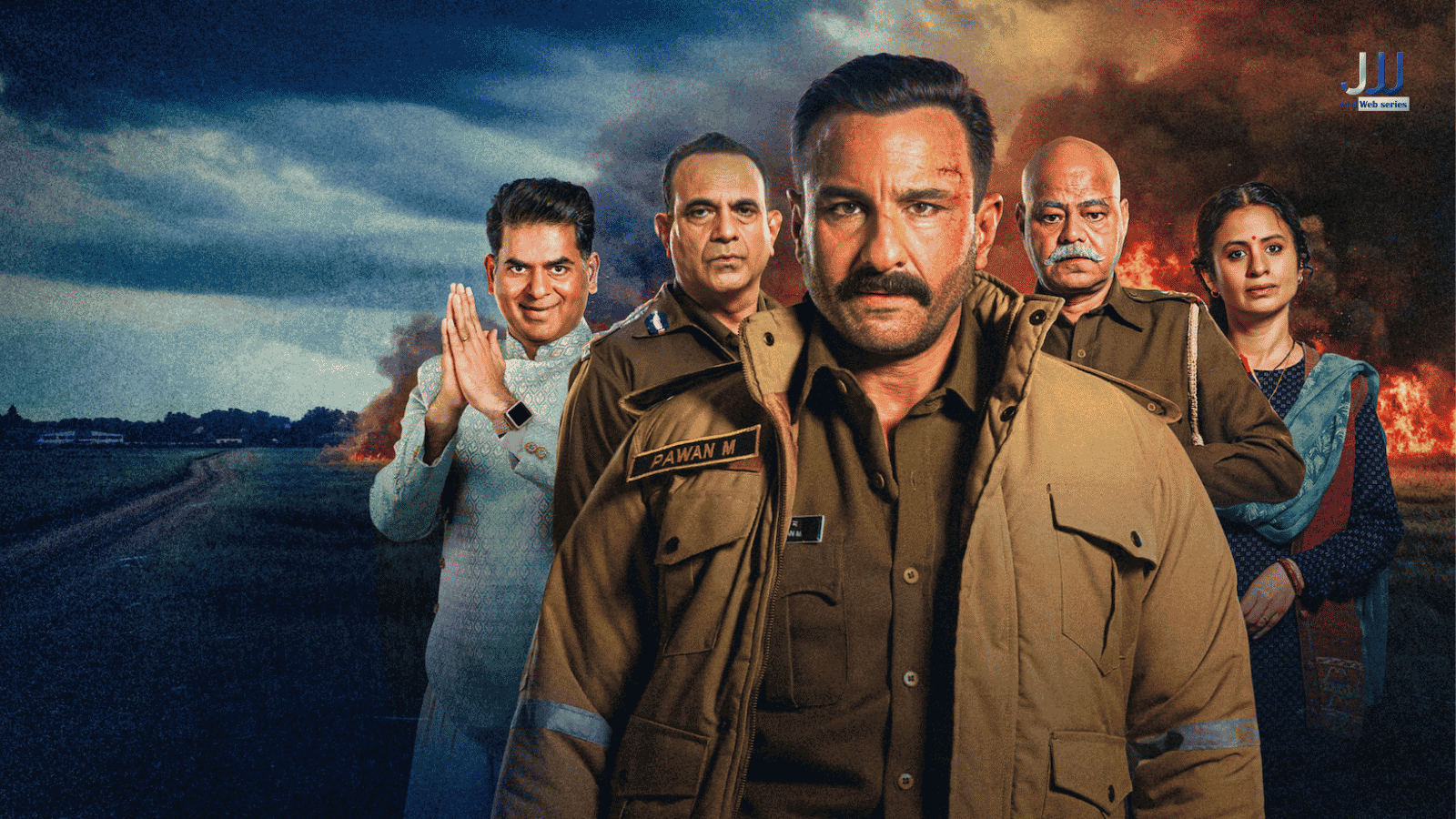

Let me tell you something most reviews won’t say upfront: if Saif Ali Khan wasn’t in Kartavya, we wouldn’t be talking about it.
That’s not an insult to the film. It’s a compliment to the man.
The Kartavya 2026 review conversation is already running hot online, and most people are circling the same uncomfortable truth – the Netflix film is uneven, occasionally frustrating, and fumbles its landing. But every single time it threatens to fall apart, Saif Ali Khan walks into the frame and holds it together with nothing but raw, restrained, career-best acting. Streaming now exclusively on Netflix, Kartavya (meaning “Duty”) is directed by Pulkit, the same filmmaker behind Bhakshak and it’s the kind of film where the performance is so far ahead of the script that you spend the entire runtime feeling two things at once: admiration and grief.
Admiration for what Saif is doing. Grief for the film he deserved to be in.
So should you watch it? Here’s my honest breakdown; everything I felt, noticed, and couldn’t stop thinking about, so you don’t have to scroll through ten sites to make up your mind.
Short Review: Kartavya (2026) is a Hindi-language Netflix crime drama where Saif Ali Khan plays a morally conflicted police officer caught between duty and family survival. It delivers a career-best performance from Saif but is let down by an uneven screenplay and a weak third act.
Kartavya 2026 Review at a Glance
| Detail | Info |
| Film Title | Kartavya |
| Platform | Netflix |
| Release Date | May 15, 2026 |
| Runtime | 1 hour 48 minutes |
| Director | Pulkit |
| Producer | Gauri Khan / Red Chillies Entertainment |
| Lead Cast | Saif Ali Khan, Rasika Dugal, Sanjay Mishra, Zakir Hussain |
| Language | Hindi (+ 8 audio dubs, 10+ subtitle languages) |
| Content Rating | TV-MA (language, smoking) |
| JWS Rating | ⭐ 6 / 10 |
| Director’s Previous Film | Bhakshak (Netflix, 2024) |
Story Overview – What is Kartavya About? (Spoiler Free Version)
Kartavya follows Pawan Malik (Saif Ali Khan), a 40-year-old police officer who faces intense scrutiny after a journalist under his protection is shot. While investigating a deepening web of corruption, his personal life simultaneously unravels, his casteist father is poisoning his son’s mind, and his brother is trapped in a dangerous land dispute.
Pawan Malik is not a super-cop. He is not fearless. He is a man straddling two collapsing worlds at once.
At work, his senior officers are circling after the journalist shooting. A manhunt begins. As Pawan digs deeper, he uncovers something far murkier than a straightforward crime, a web of power, influence, and silence that the system actively wants buried.
If you enjoy crime dramas built on atmosphere and moral ambiguity, you’ll already know this territory well and if you’re looking for more like this, our roundup of the best underrated Hindi web series on Netflix India 2026 is worth a bookmark.
At home, things are no easier. His father (Zakir Hussain) carries deep-rooted casteist beliefs slowly beginning to poison Pawan’s young son. His wife (Rasika Dugal) holds the family together while Pawan burns through his emotional reserves at the thana. His brother is tangled in a local land dispute that pulls Pawan into direct conflict with the very people he needs on his side professionally.
Kartavya is, at its core, about what happens when a decent man has no good options left. That’s the story. And it’s genuinely compelling, at least while the script holds its nerve.
JWS Review: Saif Delivers But The Script Fails
I watched Kartavya in one sitting. And for the first hour, I genuinely thought I was watching something special.
The atmosphere in the fictional town of Jhamli is lived-in and real. You feel the hierarchy in every room Pawan walks into. People speak carefully around him. Silences carry meaning. And at the centre of all of it, Saif Ali Khan is doing something I haven’t seen him do in a very long time, disappearing into a character so completely that you forget you’re watching a movie star.
What makes the Kartavya Netflix experience different from every other Indian OTT cop drama is that the real villain isn’t a person. It’s the system and more specifically, Pawan’s tragic internalisation of it. He can no longer separate his duty from his survival. That is a deeply sophisticated idea, and Saif carries it without a single overplayed moment.
Then, about two-thirds in, the film starts failing him.
Storylines building toward real confrontation get quietly resolved. The caste subplot – one of the most emotionally explosive threads in the film is introduced with devastating power and then abandoned before it fully lands. The third act wraps everything up in a way that feels less like resolution and more like retreat.
And that is the precise tragedy of Kartavya. Saif Ali Khan is acting in a brave film. The film around him keeps choosing safety. That gap between what the performance promises and what the screenplay delivers is where Kartavya ultimately loses you.
JWS rating: 6/10 – 8 for the performance, 5.5 for the film. You do the math.
Acting & Direction: Saif Ali Khan Alone Justifies Your Subscription
Saif Ali Khan as Pawan Malik – The Real Reason You’re Here
Yes, Saif Ali Khan is worth watching in Kartavya. He delivers one of his best performances in decades, restrained, emotionally layered, and completely believable as a tired, morally exhausted cop. Director Pulkit deliberately cast him to revive the heartland persona last seen in Omkaara (2006), and that gamble pays off completely.
He plays Pawan Malik with a very specific kind of physical tiredness, not the laziness of a disengaged actor, but the exhaustion of a man who has been negotiating with himself for decades and is finally running out of excuses. There is something happening behind his eyes in almost every scene that the script doesn’t fully explain, and that gap, that unspoken inner life is where great screen acting lives.
The Haryanvi inflection in Saif’s portrayal occasionally slips, but the emotional truth never does. Not once. In a film that fumbles its narrative in the final act, Saif’s performance stays completely honest from the first frame to the last.
This is the role that should reopen every conversation about where Saif Ali Khan sits among his generation.
Full Cast Breakdown
| Actor | Role | Performance |
| Saif Ali Khan | Pawan Malik, SHO | ⭐⭐⭐⭐⭐ Career-best, carries the entire film |
| Rasika Dugal | Pawan’s wife | ⭐⭐⭐ Underused but earns every scene |
| Sanjay Mishra | Supporting | ⭐⭐⭐⭐⭐ Incapable of a false note |
| Zakir Hussain | Pawan’s casteist father | ⭐⭐⭐ Deeply uncomfortable in the best way |
| Manish Chaudhari | Senior officer | ⭐⭐⭐⭐ Cold, institutional menace done right |
| Saurabh Dwivedi | Godman Anand Shri (acting debut) | ⭐⭐½ Uneven but intriguing, script abandons him before he can fully land |
Saurabh Dwivedi – The Wildcard Debut Worth Noticing
The Lallantop founder and veteran Hindi journalist Saurabh Dwivedi makes his acting debut here as Anand Shri, a godman who operates as Jhamli’s quiet puppet-master and the casting is smarter than the internet jokes suggested when it went viral in February. The role demands composed authority, shudh Hindi, and the menace of a man who never has to raise his voice, and Dwivedi, shaped by years of high-stakes political interviews understands that power dynamic instinctively.
His early scenes genuinely unsettle. A visible nervousness surfaces in the more demanding dramatic moments, and the screenplay’s worst crime is building him up as the central villain and then completely abandoning his character before any real confrontation with Pawan lands. A promising debut, limited more by the script than the performer.
Pulkit’s Direction – Brilliant in Parts, Cautious When it Counts
Pulkit understands small-town moral complexity better than most filmmakers in Hindi cinema today. His first two acts are atmospheric, controlled, and emotionally precise. He knows how to direct grief, pressure, and silence. Where he struggles as with Bhakshak before this is in closing. The third act loses its nerve at exactly the moment the film needs to be most courageous. In a thriller built on moral tension, how you end is everything.
What I Liked
- Saif Ali Khan’s performance
Career-best material that deserves every award conversation it enters - The caste subplot
Showing how prejudice passes silently from grandfather to grandson is one of the most devastating things I’ve watched in Indian OTT this year - The town of Jhamli
Production design and cinematography are exceptional: dusty, muted, and claustrophobic in exactly the right way - The film never glorifies Pawan
He makes mistakes, loses control, and is morally compromised; that honesty is rare and genuinely valuable - Runtime discipline
at 1 hour 48 minutes, there is zero flab; the film respects your time even when it frustrates your expectations - The journalist-protection premise is underused in Indian cinema and gives the story a fresh, politically resonant edge
What I Didn’t Like
- The third act collapses
After real tension across two acts, the resolution feels rushed and emotionally safe, like someone decided not to go where the story was clearly pointing - Too many themes competing at once
Caste, corruption, family duty, spiritual guilt, bureaucratic rot; all fascinating, none fully explored - The sanitised look
For a film about crime and exploitation, Kartavya often looks oddly clean, undermining the grit it’s clearly reaching for - Pawan’s brother subplot
Feels grafted on from a different, lesser film; those stakes don’t connect organically to the main investigation - Accent inconsistency
Saif’s Haryanvi inflection occasionally slips; minor, but noticeable
Kartavya vs Sacred Games – The Comparison Everyone is Making
Kartavya and Sacred Games are both Netflix India crime dramas starring Saif Ali Khan, but they are very different films. Sacred Games is tighter, faster, and more gripping from start to finish. Kartavya is slower, more emotionally layered, but with a weaker final act. Saif is arguably better in Kartavya but Sacred Games is the stronger overall film.
| Feature | Kartavya (2026) | Sacred Games (2018) |
| Pace | Slow burn | Fast, compulsive |
| Saif’s performance | More emotionally nuanced | Intense, but more surface-level |
| Narrative strength | Uneven – strong first 2 acts | Consistent throughout |
| Ending | Weak / plays it safe | Sharp and impactful |
| Core themes | Caste, duty, family, corruption | Crime, religion, politics |
| Best for | Character-first viewers | Plot-first viewers |
Still think Sacred Games was better? Revisit our full Sacred Games Season 2 breakdown and see if you feel the same after watching Kartavya.
Should You Watch Kartavya on Netflix?
Yes, but specifically for Saif Ali Khan’s performance. Kartavya is worth 108 minutes of your time if you value character-driven OTT dramas. Manage expectations around the ending.
Watch it if you:
- Want to see Saif Ali Khan at one of his career best performances
- Enjoy slow-burn, character-first crime dramas like Thar, Sacred Games, or Khakee: The Bihar Chapter
- Appreciate films that explore caste, corruption, and moral duty without preaching
Skip it if you:
- Need a strong, emotionally satisfying ending to feel a film was worth your time
- Are expecting high-octane action or plot twists, there are very few
Think of it this way: there are films where the performance elevates the movie. And then there are films where the performance is the movie. Kartavya is firmly the second kind.
Conclusion
Here’s the truth about Kartavya 2026: Saif Ali Khan is carrying this film on his back, and he does it so convincingly that you almost don’t notice the screenplay letting him down.
Almost.
Kartavya is a film that takes its audience seriously in every department except the one that matters most, the ending. It builds tension patiently, constructs a world that feels real and dangerous, and gives its lead actor material worthy of his considerable talent. Then, in the final 30 minutes, it chooses safety over courage. And that choice is the difference between a great film and a very good one.
But very good, anchored by a performance this committed and this rare, is still absolutely worth your time. Saif Ali Khan has been one of Hindi cinema’s most inconsistently used talents for two decades. Kartavya reminds you, forcefully, of what happens when a filmmaker finally trusts him completely.
Watch it for Saif. Stay for the atmosphere. Forgive the ending. Then head over to all our Netflix India movie reviews and tell us if you agree.
Keep Bingeing!!
Frequently Asked Questions (FAQs)
Is Kartavya 2026 the same as the 1995 Kartavya film?
No. Kartavya (2026) is a completely original screenplay with no connection to the 1995 Bollywood film of the same name. Both share only the title and the theme of duty the characters, plot, and universe are entirely separate.
Where can I watch Kartavya 2026?
Kartavya is available exclusively on Netflix globally from May 15, 2026 including India, the US, UK, Australia, and Canada. It is a direct-to-digital release with no theatrical run. It streams in Hindi with 8 audio dub options and subtitles in 10+ languages.
How does Kartavya compare to Sacred Games?
Saif Ali Khan is arguably better in Kartavya, but Sacred Games is the stronger film overall, tighter plotting, more consistent pace, and a sharper ending. Kartavya has more emotional depth but fumbles the third act.
Is Kartavya suitable for family viewing?
No. Kartavya is rated TV-MA for language and smoking. It deals with adult themes, caste violence, corruption, crime, and moral trauma. Best suited for mature audiences only.
Will there be a Kartavya sequel or Season 2 on Netflix?
No official confirmation yet. However, industry sources suggest Red Chillies Entertainment may build a wider "Red Chillies Crime Universe" on Netflix if viewership targets are met with Kartavya potentially serving as the pilot.




 Netflix
 Prime Video
 JioHotstar
 SonyLIV
 ZEE5
ZEE5 MX Player