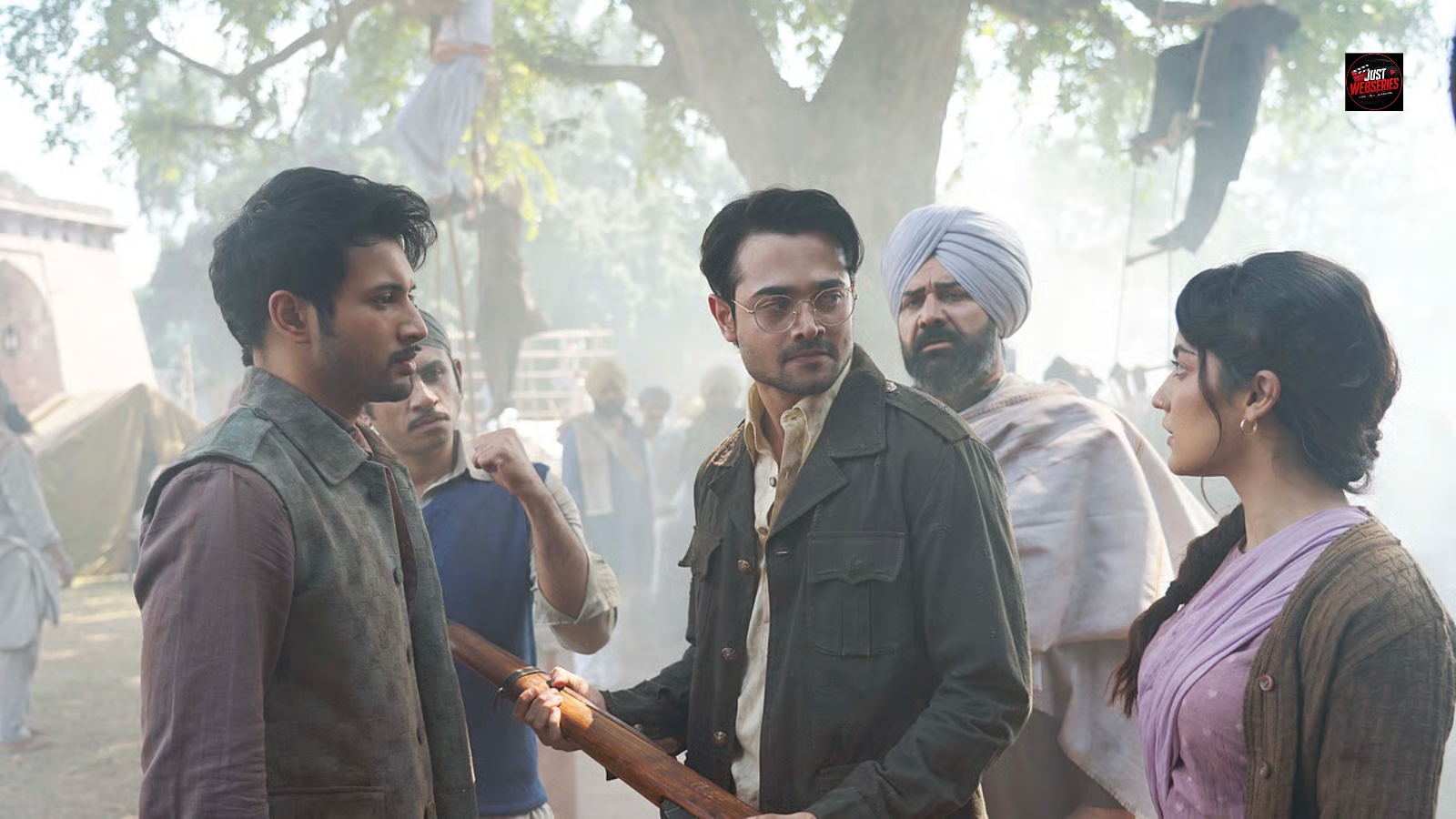

The Revolutionaries Review is what I sat down to write within hours of finishing all eight episodes of Nikkhil Advani’s newest period drama on Prime Video, and honestly, my notes app is a mess of contradictions.
This is a show that wants to be India’s answer to RRR, full of slow-motion entries, blazing dialogue, and heroes who look like they walked off a magazine cover even while hiding from the British police.
And for long stretches, it actually works. But The Revolutionaries Review also has to be honest about where the show stumbles, because glamour and grit don’t always sit comfortably together.
Based on Sanjeev Sanyal’s non-fiction book “Revolutionaries: The Other Story of How India Won Its Freedom,” this eight-episode series shifts the spotlight away from the usual Gandhi-Nehru-Bose narrative and onto four younger, lesser-known freedom fighters whose stories rarely make it into textbooks.
If you’re searching for an honest, no-fluff The Revolutionaries review before hitting play tonight, this is the deep dive you need.
Is The Revolutionaries Worth Watching on Prime Video?
Short answer: yes, with caveats. This The Revolutionaries Prime Video review isn’t going to tell you it’s a masterpiece, but it isn’t a waste of 8 hours either. Nikkhil Advani, who won massive praise for Freedom at Midnight, returns to the freedom-struggle genre with a completely different tone.
Where Freedom at Midnight was slow, political, and dialogue-heavy, The Revolutionaries is loud, kinetic, and built for a generation raised on Instagram reels and RRR-style theatrics.
It released on Amazon Prime Video on 11 September 2026, runs across 8 episodes of roughly an hour each, and is set primarily between 1912 and 1915 across Delhi, Lahore, Calcutta, Dehradun, and Benaras.
What immediately stands out to me is how determined the series is to make India’s revolutionary movement feel like an action saga. Instead of presenting the freedom struggle only through political conversations and historical speeches, Advani fills the show with secret meetings, underground networks, coded messages, betrayals, chases, weapons, and confrontations with the British Raj.
And yes, there are moments that feel very RRR-coded. The characters are larger than life, the action is heightened, and several sequences seem designed to make you cheer rather than quietly reflect on history. I personally don’t mind that approach when it works, because historical dramas don’t always have to feel like textbooks.
The problem is that The Revolutionaries sometimes confuses being energetic with being emotionally powerful.
The show moves quickly between locations and characters, introducing different revolutionaries and political developments while trying to maintain a thriller-like pace. That makes it easy to binge, but it also means some characters don’t get enough emotional depth. I often found myself more interested in the historical events surrounding them than in the personal journeys the series was trying to build.
Still, the scale deserves credit. The period setting, costumes, production design and action sequences give the series a cinematic quality that is difficult to ignore. There is clearly a lot of ambition behind the project, and Advani doesn’t play it safe.
The performances are another reason to keep watching. The ensemble works best when the actors are allowed to bring some restraint to their characters rather than delivering every scene at maximum intensity. Some of the quieter moments, especially when the revolutionaries are forced to choose between personal relationships and the larger cause, are among the show’s strongest.
For me, the biggest question is whether The Revolutionaries actually brings something new to the freedom-struggle genre. That’s where I think the answer is only partly yes.
It looks bigger, moves faster and feels more contemporary than many traditional historical dramas, but the storytelling itself isn’t always as revolutionary as the title suggests.
So, if you’re looking for a serious historical account, this may not completely satisfy you. But if you want an 8-episode period action thriller with revolutionary politics, dramatic confrontations and RRR-style spectacle, The Revolutionaries is definitely worth putting on your Prime Video watchlist.
The Revolutionaries Plot: What Is the Show Actually About?
The story follows four young revolutionaries who believed that petitions and peaceful protest weren’t enough to end British colonial rule, and that armed resistance was the only real answer. The show centers on:
- Rash Behari Bose (played by Bhuvan Bam): the mastermind whose plan to hoist the Ghadar Party’s flag eventually lays the foundation for the Indian National Army.
- Sachindranath Sanyal (played by Rohit Saraf): a real historical figure and grand-uncle of author Sanjeev Sanyal himself.
- Bagha Jatin (played by Gurfateh Pirzada): a Bengal-based revolutionary known for his physical strength and fearlessness.
- Pratibha Lahiri (played by Pratibha Ranta): a fictionalized composite character based on real women like Bhikaji Cama and Annie Besant.
Jason Shah plays General Dyer, adding a chilling colonial antagonist to the mix. The narrative eventually builds toward the historic Ghadar Mutiny of 1915 in Lahore, and every The Revolutionaries web series review 2026 you’ll find agrees this mid-point sequence is where the show hits its dramatic peak.
Cast and Performances: Does Bhuvan Bam Deliver?
This is the section every Bhuvan Bam The Revolutionaries review has to address, because his casting genuinely surprised fans. Known primarily as a YouTuber-turned-actor, Bam takes on the role of a serious historical freedom fighter here, and largely pulls it off. He carries the “cool, young, hip” energy that director Advani was clearly going for, and he anchors the ensemble with quiet confidence rather than over-the-top heroics.
Paoli Dam also delivers a standout supporting performance, described by multiple critics as one of the strongest parts of the series.
Rohit Saraf brings vulnerability to Sachindranath Sanyal, while Pratibha Ranta’s character, despite being a fictional addition, ends up being one of the more emotionally resonant threads of the show.
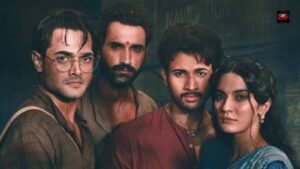
Any complete The Revolutionaries Nikkhil Advani review has to credit the ensemble for surrendering fully to the director’s stylized vision, even when the writing doesn’t always support them.
Direction, Cinematography & Music
Gairik Sarkar’s cinematography is genuinely one of the best things about this show. Locations across Amritsar, Varanasi, and Dehradun feel textured and lived-in rather than like constructed film sets.
Advani punctuates high-tension escape sequences with inspiring speeches, dance numbers, and slow-motion hero entries, a clear RRR influence that this The Revolutionaries review can’t ignore.
The background score supports both the action-heavy sequences and the quieter, reflective character moments across all 8 episodes.
What Works in the Revolutionaries
- Fresh historical ground: Instead of retelling Gandhi or Bhagat Singh’s story for the hundredth time, it spotlights forgotten figures like Kartar Singh Sarabha, who was hanged at just 19.
- Visual spectacle: Big production value, real locations, and confident camera work.
- Bhuvan Bam’s range: A genuine departure from his comedic YouTube persona.
- Pacing in the back half: Once the story reaches the Ghadar Mutiny, momentum picks up significantly.
- Paoli Dam’s screen presence: Consistently mentioned as a highlight across nearly every published review.
What Doesn’t Work: The Honest Criticism
No genuine The Revolutionaries review can skip the flaws:
- Cluttered writing: With four parallel character arcs, the screenplay occasionally loses focus, jumping between threads without giving each one enough breathing room.
- Tonal inconsistency: Modern, “cool” dialogue (one character casually references Sherlock Holmes) repeatedly pulls you out of the 1912-1915 period setting.
- Limited ideological dept: The show prioritizes style over substance when explaining why armed resistance mattered as a political philosophy, something Freedom at Midnight handled with more nuance.
- Language choice: None of the primarily Bengali freedom fighters actually speak Bengali on screen; nearly everything is in Hindi, which feels like a missed opportunity for authenticity.
- Excessive theatricality: The RRR-inspired stylization sometimes undercuts the emotional weight the true story deserves.
The Revolutionaries vs Freedom at Midnight: Which Is Better?
If you’re comparing Advani’s two historical projects, Freedom at Midnight remains the stronger, more mature piece of storytelling thanks to its stellar ensemble cast and tighter narrative focus on 1946-47.

The Revolutionaries, in comparison, trades subtlety for spectacles. It’s engaging and action-heavy but doesn’t quite match the emotional depth of its predecessor. If you enjoyed the political drama of Freedom at Midnight, go in expecting something louder and more youth-oriented this time.
The Revolutionaries Rating: Our Verdict
Across major publications, ratings for this show have landed between 2.5 to 3.5 out of 5 stars. Our own verdict for this The Revolutionaries review sits at 3/5, a visually stunning, well-intentioned tribute to India’s forgotten freedom fighters that ultimately feels more familiar than revolutionary. It’s a solid one-time watch, especially if you’re a Bhuvan Bam fan or enjoy history-based action dramas, but it stops short of greatness.
If period dramas and freedom-struggle stories are your genre, you might also want to check out our full breakdown of Freedom at Midnight Season 2 update or browse more titles under us Drama category for similar recommendations. You can also revisit our earlier coverage in The Revolutionaries Teaser breakdown to see how the marketing built up expectations before release.
Where to Watch the Revolutionaries
The Revolutionaries is streaming exclusively on Amazon Prime Video as of 11 September 2026. All 8 episodes are available to binge in one go. For more shows currently streaming on the platform, check our full Prime Video collection, and don’t miss our list of Upcoming Series landing later this year.
Conclusion
To wrap up this The Revolutionaries review, Nikkhil Advani’s latest offering is an ambitious, visually rich tribute to India’s forgotten freedom fighters that trades historical restraint for RRR-style spectacle.
It doesn’t always land its emotional beats, and the writing could have used one more editing pass, but Bhuvan Bam’s committed performance, Gairik Sarkar’s cinematography, and the genuinely fascinating real history at its core make this a worthwhile watch for anyone who enjoys period action dramas.
Whether you come for the freedom-struggle history or for Bhuvan Bam in a new avatar, The Revolutionaries earn a place on your Prime Video watchlist, just don’t expect it to top Freedom at Midnight. For more honest, first-hand OTT reviews like this one, keep checking back on our Series Reviews section.
FAQs
Is The Revolutionaries based on a true story?
Yes. The Revolutionaries is based on Sanjeev Sanyal’s non-fiction book “Revolutionaries: The Other Story of How India Won Its Freedom,” and follows real historical figures including Rash Behari Bose, Sachindranath Sanyal, and Bagha Jatin, with some fictionalized characters added for dramatic effect.
How many episodes does The Revolutionaries have?
The Revolutionaries has 8 episodes, each roughly 50-60 minutes long, streaming on Amazon Prime Video.Who plays the lead role in The Revolutionaries?
Who plays the lead role in The Revolutionaries?
Bhuvan Bam plays Rash Behari Bose, the central strategist among the four revolutionaries. This is one of his most significant departures from his usual comedic YouTube content into serious dramatic acting.
Is The Revolutionaries worth watching on Prime Video?
Based on this The Revolutionaries review, yes — it’s worth a watch for its visual scale, strong performances from Bhuvan Bam and Paoli Dam, and its focus on lesser-known freedom fighters, even though the writing and pacing aren’t consistently strong
Is The Revolutionaries connected to Freedom at Midnight?
They aren’t directly connected in story, but both are directed by Nikkhil Advani and explore different chapters of India’s independence movement — Freedom at Midnight covers 1946-47, while The Revolutionaries covers 1912-1915.




 Netflix
 Prime Video
 JioHotstar
 SonyLIV
 ZEE5
ZEE5 MX Player