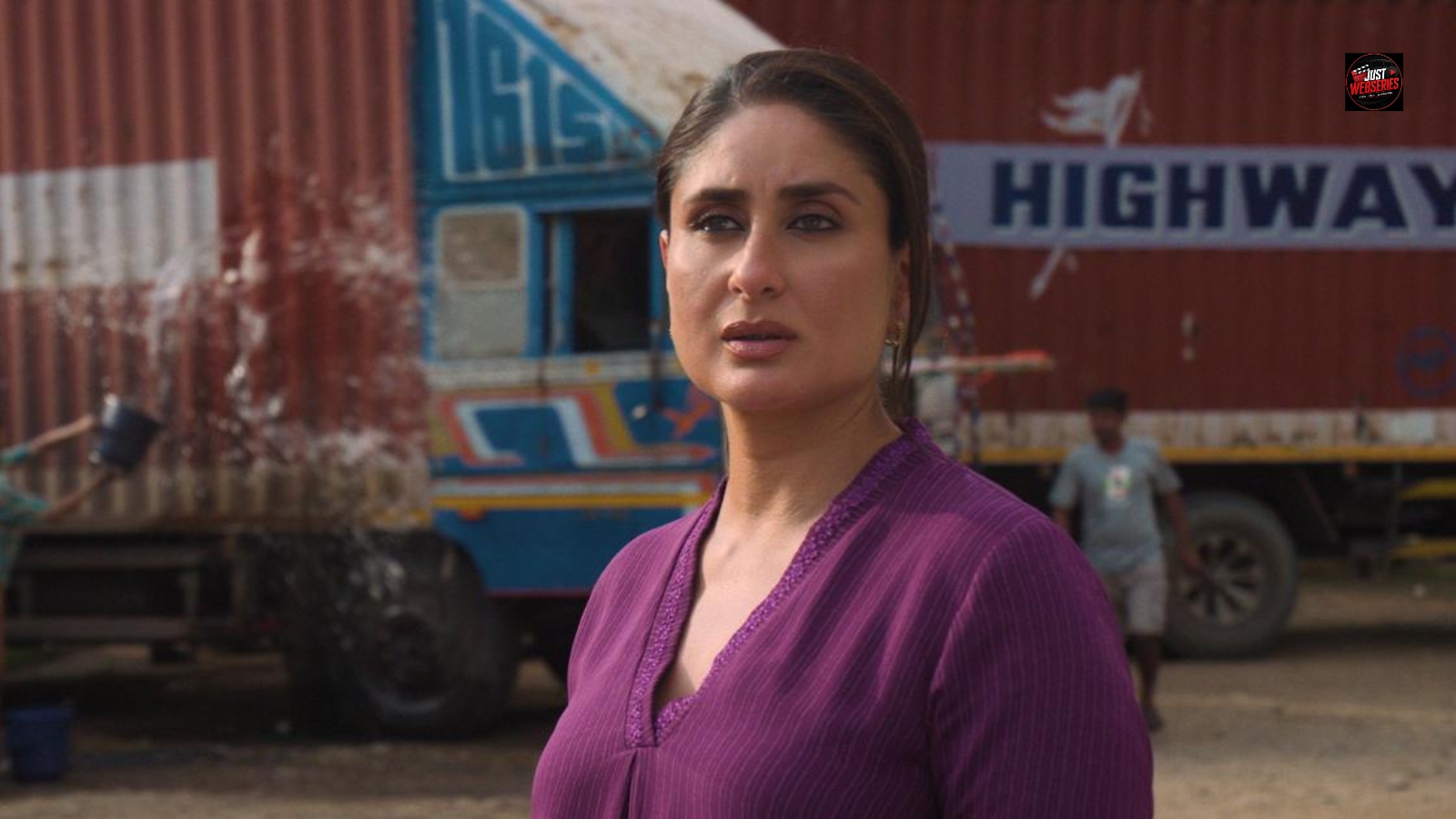

Daayra Ending Explained, if you’re also typing this into Google the moment you walk out of the theater, you’re not alone. I’m Khushi, and I caught the first-day-first show of Daayra, and in this Daayra Ending Explained breakdown, I’ll walk you through exactly what happened in the climax, why it happened, and why Kareena Kapoor’s character personally left me a little disappointed even as Prithviraj Sukumaran owned the screen.
Meghna Gulzar, who gave us films like Talvar and Raazi, is back with a cop-versus-cop moral thriller, Daayra, released in theatres on September 18, 2026. The film is inspired by real events and asks a question that feels deeply relevant to India today: if the system keeps failing people, is extrajudicial justice ever justified?
This entire Daayra Ending Explained article contains spoilers, so if you haven’t watched the movie yet, please do so first, or read on at your own risk.
Quick Take: Daayra at a Glance
Cast: Kareena Kapoor Khan, Prithviraj Sukumaran, Kshitee Jog, Bhavesh Babbani
Director: Meghna Gulzar
Genre: Crime Thriller
Release: Theatrical
My Rating: 3/5, strong premise and performances, weak climax
If you’re a fan of the crime thriller genre, this one absolutely deserves a spot on your watchlist, just walk in with tempered expectations.
Daayra Plot Summary (Spoiler-Free Zone)
The story follows two DCPs with completely opposite ideas of justice. DCP Raman Kumar (Prithviraj Sukumaran) is an encounter specialist who believes that when the system fails, decisive action becomes necessary.
The film opens with a moment where Raman and his team have already gunned down all four men accused of raping and murdering a 24-year-old woman, Ragini Poojari, in a police encounter. The public celebrates this as “instant justice,” and Raman is treated like a hero.
But questions soon arise about the circumstances of the encounter, and that’s where DCP Ajooni Kohli (Kareena Kapoor Khan) enters. A Special Investigation Team (SIT) is formed, and Ajooni is put in charge of finding out whether the encounter was genuine, or a cover-up.
A Shocking Encounter Becomes Instant Justice
Daayra opens after a brutal crime has already taken place. A 24-year-old woman named Ragini Poojari has been raped and murdered, leaving the public demanding immediate action from the police. The four men accused of the crime are eventually tracked down by Raman Kumar and his team.
What happens next becomes the film’s central controversy.
Raman and his team kill all four accused in a police encounter. The police present the incident as an encounter in which the accused resisted or attempted to escape, leading to their deaths. With the horrific nature of Ragini’s case fresh in everyone’s mind, the public quickly accepts the encounter as justice.

Instead of waiting years for a court verdict, the accused are dead within days. For many people, this feels like a quick and satisfying answer to a horrifying crime.
Raman becomes a public hero almost overnight. His image as a tough police officer grows stronger, and the encounter is celebrated as an example of “instant justice.” The public reaction also reflects a larger debate surrounding encounters: whether criminals who commit particularly brutal crimes deserve the chance to face a long legal process, or whether immediate police action is justified when the system appears too slow.
But Raman’s version of events does not remain unquestioned for long.
Doubts Begin to Surround the Encounter
As the initial excitement fades, questions start emerging about what really happened during the encounter. Was it genuinely a confrontation in which the four accused were killed while resisting the police? Or did the police deliberately stage the encounter after taking them into custody?
These questions become increasingly important because the deaths have effectively eliminated the possibility of the accused standing trial. If the encounter was genuine, Raman and his team may have simply carried out their duty under extraordinary circumstances. But if it was staged, the case becomes far more complicated.
The film therefore shifts its focus from the original rape-and-murder case to the circumstances surrounding the deaths of the four accused.

This is where DCP Ajooni Kohli enters the story.
Ajooni Kohli Takes Charge of the Investigation
With serious doubts surrounding Raman’s encounter, the authorities form a Special Investigation Team (SIT) to investigate the incident. Ajooni Kohli is appointed to lead the investigation.
Her task is not simply to determine whether the four men were guilty of Ragini’s murder. That part of the case has effectively been overtaken by their deaths. Instead, Ajooni must establish exactly what happened between the accused being caught and eventually being killed.
Daayra Ending Explained: What Really Happens in the Climax
Now let’s get to the part you’re actually here for, Daayra ending explained step by step.
As Ajooni’s investigation progresses, she uncovers multiple discrepancies in the official version of the encounter.
During a crime scene recreation, gaps in the timeline surface, revealing that the encounter wasn’t as “clean” as it was made out to be. Ajooni comes to understand that Raman didn’t follow procedure at all, this was a planned execution, not a genuine encounter.

The film’s climax finally brings the two characters face-to-face, for the first and last time. This is the emotional and philosophical core of the entire movie. Ajooni makes her stance clear: for her, justice means operating within the boundaries of the law. Raman, on the other hand, believes that when a system repeatedly fails its victims, conscience has to override the law.
Here’s the most important part of Daayra ending explained: the film deliberately refuses to give you a clean resolution. Raman isn’t painted as a villain, and Ajooni isn’t presented as a flawless hero.
Both have their own justifications, and the film leaves it up to you to decide who was right. This is very much Meghna Gulzar’s signature filmmaking style, the same approach she took in Talvar, where multiple versions of the truth were presented without a definitive answer.
That said, honestly, the climax feels somewhat abrupt. After all that build-up, you expect one more decisive confrontation or a twist that fully lands, and it doesn’t quite arrive. Many reviewers, and I, felt the film doesn’t explore its own questions as deeply as it initially promises to.
Why Kareena Kapoor’s Character Feels Disappointing
This section is hard for me to write, because Kareena Kapoor Khan doesn’t fall short on acting at all her eyes, her restrained expressions, everything is on point. The problem isn’t the performance; it’s the writing.
Ajooni Kohli is introduced as a strong, no-nonsense investigator, someone who investigates the incident, not her colleagues.
That’s a refreshing change, because female cop characters in recent Bollywood films are often written as troubled or burdened, while Ajooni comes across as composed and confident.
But that’s exactly where the character stays shallow. Ajooni’s personal life, her relationship with her father, her internal conflict, all of it is touched on at a surface level and never fully explored.
There was a genuinely fascinating angle here: does Ajooni fear that she could become someone like Raman herself? The film introduces this idea but never takes the time to develop it.
The result is that by the time the film ends, you understand Raman’s motivations completely, while Ajooni remains a somewhat one-dimensional “voice of the law” — despite having far more potential for a real character arc.
Prithviraj Sukumaran: The Performance That Elevates the Film
If there’s one thing in this film that’s flawless without a doubt, it’s Prithviraj Sukumaran’s performance. As DCP Raman Kumar, his dialogue delivery is superb, but what’s most impressive is how much he communicates purely through his eyes.
Raman is a complex character, neither a complete hero nor a complete villain.
He genuinely believes he’s doing the right thing, and Prithviraj performs that conviction with such authenticity that you find yourself understanding him even while disagreeing with him.
That’s exactly the quality that makes a morally grey character memorable, and Prithviraj nails it perfectly.
Meghna Gulzar’s Direction: Strengths and Weaknesses
Meghna Gulzar maintains tight control through most of the film. Her setup is fast, Ragini’s disappearance and the discovery of her burnt body happen quickly, keeping the focus on the investigation.
Subtly weaving in real-life juvenile justice loopholes is also a smart writing choice that elevates the film beyond pure entertainment.
But the pacing slackens in the second half. The investigation starts to feel stretched, and in a few places it’s genuinely confusing whether a scene is a flashback or unfolding in the present.
The background score also occasionally becomes more dramatic than necessary, even when scenes already carry their weight through dialogue and acting alone.
Should You Watch Daayra? My Final Verdict
If you enjoy thought-provoking Bollywood cinema that pushes you to question the justice system, Daayra absolutely deserves a watch. Prithviraj Sukumaran’s performance alone justifies the ticket price, and Meghna Gulzar’s premise is genuinely important.
But if you’re expecting a tight, satisfying climax, brace yourself a little, the film doesn’t fully answer the questions it raises. After this entire Daayra ending explained discussion, my honest take is: the film is worth watching, but it’s not a masterpiece.
My rating: 3/5
Daayra vs Talvar vs Raazi: Which Meghna Gulzar Film Is Best?
Fans of Meghna Gulzar will naturally compare. Talvar is still considered her sharpest work for its multiple-perspective storytelling. Raazi was stronger in emotional depth and character arc.
Daayra is just as ambitious in premise as both, but its execution, especially the climax, isn’t as tight. If you’re exploring the thriller genre, start with Talvar, then watch Daayra.
Conclusion
To sum up this Daayra ending explained breakdown, Meghna Gulzar has crafted a film with a powerful premise that will be remembered largely because of Prithviraj Sukumaran’s performance, while Kareena Kapoor’s character never becomes as impactful as it could have, due to weaker writing rather than weaker acting.
The climax is admittedly abrupt, but the questions the film raises are genuinely important for today’s times.
If you’ve watched Daayra, let me know in the comments how did the climax land for you? And if you enjoy crime and thriller reviews like this, explore more honest reviews on JustWebSeries.
FAQs
What is the ending of Daayra, explained simply?
In the climax, Ajooni and Raman finally confront each other face-to-face. Ajooni proves the encounter wasn’t genuine. The film ends on an open note, leaving the conflict between justice and conscience unresolved, without clearly declaring either side right or wrong.
Is Daayra based on a real event?
The film is inspired by a controversial police encounter case, though names and details have been fictionalized.
Is Daayra worth watching?
Yes, if you enjoy crime thrillers and morally grey storytelling. The performances are strong, though the climax feels somewhat weak.
What does the title "Daayra" mean?
Daayra” translates to “circle”, symbolizing the boundaries of law and justice within (or outside) which the characters operate.
When will Daayra release on OTT?
The official streaming date hasn’t been announced yet. I’ll update this article as soon as it’s confirmed.



 Netflix
 Prime Video
 JioHotstar
 SonyLIV
 ZEE5
ZEE5 MX Player