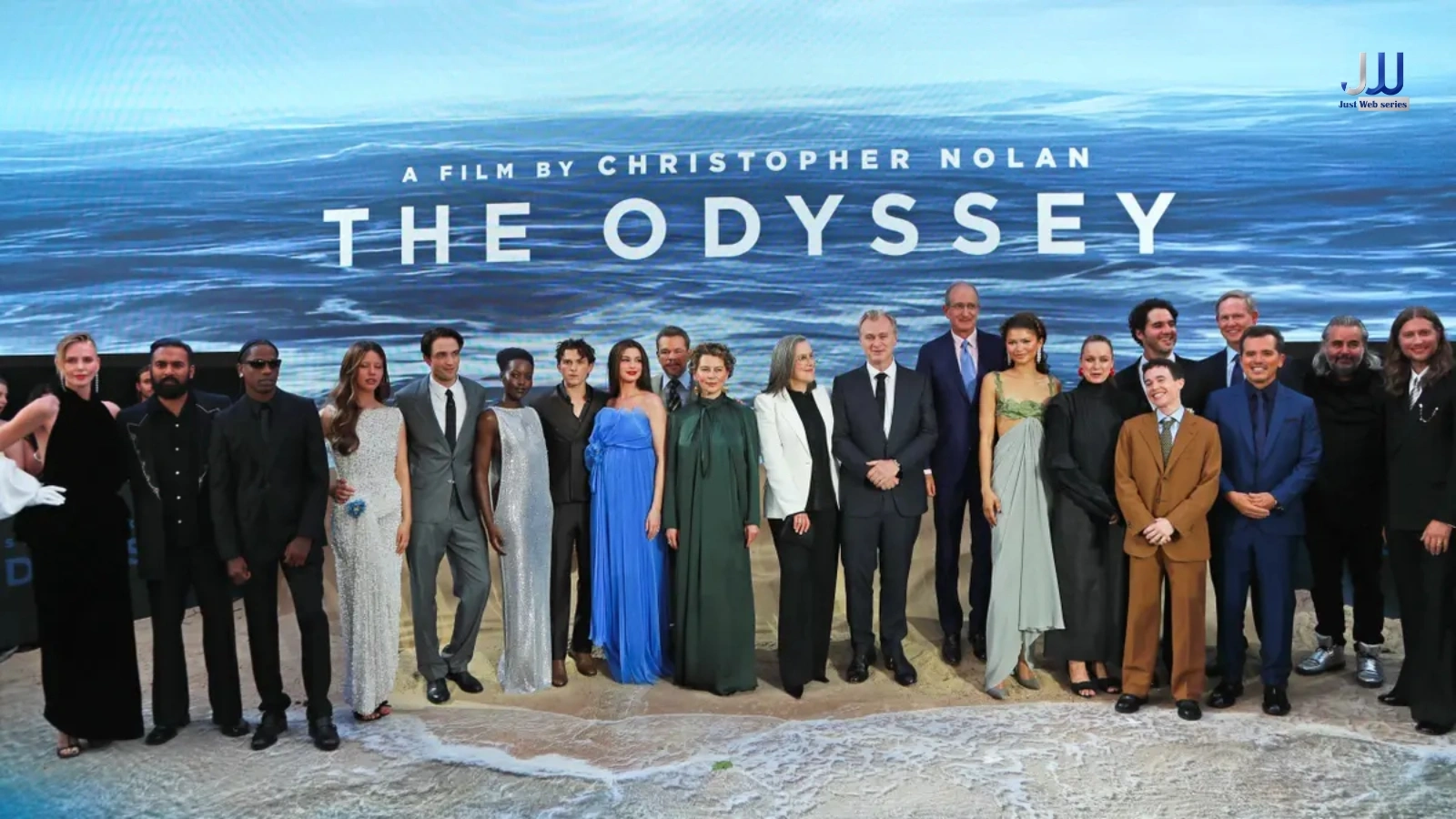

Christopher Nolan’s The Odyssey isn’t just another Hollywood release for me, it’s the film I’ve been tracking since Universal first announced it back in December 2024, and after sitting through its IMAX 70mm run this July, I can tell you it has completely reset what “epic filmmaking” means in 2026.
I walked in expecting another Nolan puzzle-box, and I walked out thinking about how far Indian cinema still must go before it can produce something on this scale.
This isn’t me being dismissive of Bollywood, I genuinely love our epics, but numbers, craft, and sheer ambition don’t lie, and in this Christopher Nolan’s The Odyssey review, I’m breaking down exactly why.
What Is Christopher Nolan’s Odyssey About?
Nolan’s The Odyssey is his own retelling of Homer’s 2,700-year-old epic poem, following King Odysseus’s brutal, decade-long journey home after the Trojan War.
Written, directed, and produced by Nolan himself alongside longtime producing partner Emma Thomas, the film carries a reported production budget of $250 million, making it one of the costliest literary adaptations ever greenlit by a major studio.
It was released in theatres on July 17, 2026, with early preview shows starting a day earlier on July 16.
What sets it apart immediately is the format: the entire film was shot using IMAX 70mm cameras across multiple countries, something no Indian production has attempted at this scale, and very few Hollywood films have either.
Cinematographer Hoyte van Hoytema and composer Ludwig Göransson, both longtime Nolan collaborators, return here, along with editor Jennifer Lame.
Christopher Nolan’s The Odyssey Cast: A Star-Studded Ensemble
If you’re wondering why the hype around this film has been so massive, the cast list explains a lot:
- Matt Damon as Odysseus — his third Nolan collaboration after Interstellar and Oppenheimer
- Anne Hathaway as Penelope, Odysseus’s wife
- Tom Holland as Telemachus, their son
- Zendaya as the goddess Athena
- Robert Pattinson as Antinous, one of Penelope’s suitors
- Charlize Theron, Lupita Nyong’o, Elliot Page, Jon Bernthal, Mia Goth, and even rapper Travis Scott in a surprise cameo
That’s close to a dozen A-listers in a single film, a scale of ensemble casting that even our biggest Bollywood multi-starrers rarely attempt outside of a Diwali tentpole.
Nolan reportedly cast Travis Scott specifically to draw a parallel between rap and ancient oral poetry, which tells you how deliberate every casting choice here was.
The Odyssey Movie vs Bollywood Epic Films: The Real Comparison
This is where I want to be fair and specific, because “Bollywood can’t match Hollywood” is a lazy take I don’t agree with blindly. Let’s compare:
Factor | The Odyssey (2026) | Typical Bollywood Epic |
Budget | $250 million (~₹2,080 crore) | ₹200–600 crore (rare exceptions) |
Format | Full IMAX 70mm film | Digital, occasional IMAX post-conversion |
Shoot locations | Multiple countries | Mostly domestic/limited international |
Lead cast | 10+ A-list global stars | 2–4 major stars typically |
Source material | 2,700-year-old Homeric epic | Often original or historical scripts |
Our epics like Baahubali, RRR, and Adipurush have tried to chase this scale, and Baahubali genuinely came close in ambition on a fraction of the budget, that’s worth respecting.
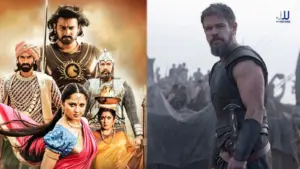
But when it comes to Christopher Nolan’s The Odyssey vs Bollywood epic movies, the gap isn’t about talent; it’s infrastructure, camera technology, and the kind of studio backing that allows a $250 million literary gamble in the first place.
Why The Odyssey’s IMAX 70mm Scale Outclasses Indian Epics
I’ll be honest, watching this in IMAX 70mm changes the entire argument. Every wave, every storm, every clash on that Trojan battlefield is captured on physical film, not upscaled digital footage.
My The Odyssey IMAX 70mm review take is simple: this is the kind of format only a handful of theaters in India (Mumbai, Delhi, and Bangalore) can even project properly, and it’s a technical bar Bollywood productions haven’t chased yet, mainly because IMAX film cameras and processing facilities barely exist in India’s production pipeline.
After watching The Odyssey in IMAX 70mm, I genuinely feel that this is the format Christopher Nolan intended audiences to experience. The difference isn’t just noticeable, it’s extraordinary. From the breathtaking landscapes to the massive battle sequences, everything feels more immersive, sharper, and incredibly lifelike.
Every scene feels larger than life.
One of the first things I noticed was the sheer scale of the visuals. The towering ocean waves, dramatic storms, ancient Greek landscapes, and intense Trojan War sequences don’t just look impressive, they make you feel like you’re standing inside the story.
The IMAX 70mm format captures an incredible amount of detail, making every frame appear richer and more cinematic than a standard digital projection.
Shot on Real IMAX Film Cameras
Unlike many modern blockbusters that rely primarily on digital cameras, The Odyssey was filmed using IMAX film cameras. This means the movie wasn’t simply converted or upscaled for IMAX after production.
Because it was captured on physical film, the image offers:
- Exceptional clarity and sharpness
- Richer colors and deeper contrast
- More natural textures and lighting
- Incredible detail even in large action scenes
- A truly immersive big-screen experience
It’s a technical achievement that becomes obvious the moment the film begins.
The Battle Sequences Are Absolutely Stunning
The large-scale action scenes are where IMAX 70mm truly shines.
Whether it’s massive naval battles, sweeping shots of ancient kingdoms, or the chaos of the Trojan battlefield, every sequence feels incredibly realistic. The wider aspect ratio allows you to see more of the environment, making each battle feel grander and more intense.
Instead of focusing only on the main characters, you can appreciate the scale of the entire battlefield unfolding around them.
A Rare Experience in India
Another reason this experience feels special is that only a handful of theatres in India are equipped to project genuine IMAX 70mm film.
Cities such as:
- Mumbai
- Delhi
- Bengaluru
are among the few places where audiences can experience the movie in its highest-quality presentation. For most viewers, standard IMAX Digital or regular multiplex screenings simply cannot reproduce the same level of image quality.
Why Bollywood Hasn’t Matched This Yet
In my opinion, one major reason Bollywood hasn’t produced many films on this level is the lack of infrastructure.
Producing a movie using IMAX film cameras requires the following:
- Extremely expensive IMAX camera systems
- Specialized film stock
- Advanced film processing laboratories
- Dedicated IMAX post-production workflows
- Theatres capable of projecting authentic IMAX 70mm film
At the moment, India’s filmmaking ecosystem is still largely centered around digital production, which is more practical and cost-effective. As a result, very few Indian productions attempt the kind of large-format filmmaking that Christopher Nolan is known for.
Budget Battle: $250 Million vs Bollywood’s Biggest Epics
To put that $250 million in perspective, that’s roughly ₹2,080 crore at current exchange rates. Compare that to:
- RRR: ₹550 crore
- Adipurush: ₹700 crore
- Baahubali 2: ₹250 crore
Even our most expensive film ever made costs roughly one-third of what Nolan spent on The Odyssey alone. That budget difference shows up directly on screen, in production design, VFX polish, and the sheer number of practical sets built across countries.
Is The Odyssey Better Than Bollywood Epics? My Honest Take
Here’s my honest, personal answer to the question I keep getting asked: is The Odyssey better than Bollywood epics? Technically and financially, yes, no contest. Emotionally and culturally? Not necessarily.
Baahubali and RRR connect with Indian audiences in a way Nolan’s Greek mythology simply won’t, because our epics are built on stories we grew up with.
So “better” depends on what you’re measuring; global scale and craft go to Nolan.
Heart, mass connect, and cultural rootedness still belong to Bollywood.
What Bollywood needs isn’t bigger stars; it’s the studio’s courage to greenlight a $250 million bet on something as untested commercially as a 2,700-year-old poem.
That’s the connection, gap this film exposes.
Where to Watch the Odyssey in India
The Odyssey was released theatrically worldwide on July 17, 2026, distributed by Universal Pictures, with select IMAX 70mm screens running in major Indian cities.
For the latest streaming and OTT release updates once the theatrical window closes, keep checking out the Hollywood News section and Upcoming Movies page; we’ll update the moment a platform is confirmed.
If you enjoy grand-scale storytelling, also check out our reviews of other fantasy genre titles and action epics we’ve covered, and browse all our latest verdicts on the movie reviews hub.
Christopher Nolan’s The Odyssey was released in theaters worldwide on July 17, 2026, with Universal Pictures handling global distribution. In India, the film received a premium release across major multiplex chains, with select IMAX 70mm screenings available in cities such as Mumbai, Delhi, Bengaluru, Hyderabad, Chennai, and Pune, allowing audiences to experience Nolan’s latest epic in the format it was designed for.
If you couldn’t catch the film in theaters or you’re waiting to watch it at home, the streaming release hasn’t been officially announced yet.
Like most major Hollywood releases, The Odyssey is expected to complete its theatrical run before arriving on a digital platform.
The exact OTT release date will depend on factors such as the film’s box office performance, distribution agreements, and regional licensing rights.
As soon as Universal Pictures or the official streaming partner confirms where The Odyssey will be available online, I’ll update this guide with the latest information, including the expected OTT platform, digital rental availability, and streaming release timeline.
Until then, I recommend checking our Hollywood News section for the latest announcements, trailers, box office updates, and cast interviews.
You can also visit our Upcoming Movies page to stay informed about other highly anticipated Hollywood releases arriving in theaters and on OTT platforms.
If you’re a fan of large-scale fantasy adventures, mythological epics, and visually spectacular filmmaking, don’t miss our reviews and recommendations covering similar blockbuster titles.
You can also explore our movie reviews hub for honest, spoiler-free reviews, ratings, ending explanations, and detailed coverage of the latest Hollywood and international releases.
Conclusion
Christopher Nolan’s The Odyssey isn’t just a film; it’s a benchmark. It shows what happens when a $250 million budget, an all-star cast, and a director obsessed with practical scale come together on a story that’s outlived civilizations.
Bollywood has the stories and the emotion to match anyone in the world, but films like this are a reminder that scale, format, and studio ambition are the next frontier our industry needs to chase.
Until then, The Odyssey stands as 2026’s clearest lesson in what “epic” is actually supposed to look like.
What did you think of The Odyssey? Drop your review in the comments, and don’t forget to check out more movie reviews on JustWebSeries.
FAQS
When did Christopher Nolan's The Odyssey release?
It released in theatres on July 17, 2026, with preview shows a day earlier on July 16.
Who plays Odysseus in The Odyssey?
Matt Damon plays Odysseus, in his third collaboration with Christopher Nolan.
What is the budget of The Odyssey?
The film was made on a reported budget of $250 million (roughly ₹2,080 crore).
Was The Odyssey shot entirely in IMAX?
Yes, it’s one of the few films shot completely using IMAX 70mm film cameras across multiple countries.
Is The Odyssey better than Bollywood epics like RRR or Baahubali?
In scale, budget, and technical craft, yes. But in cultural connection and emotional mass appeal, Bollywood epics still hold their own ground with Indian audiences.



 Netflix
 Prime Video
 JioHotstar
 SonyLIV
 ZEE5
ZEE5 MX Player