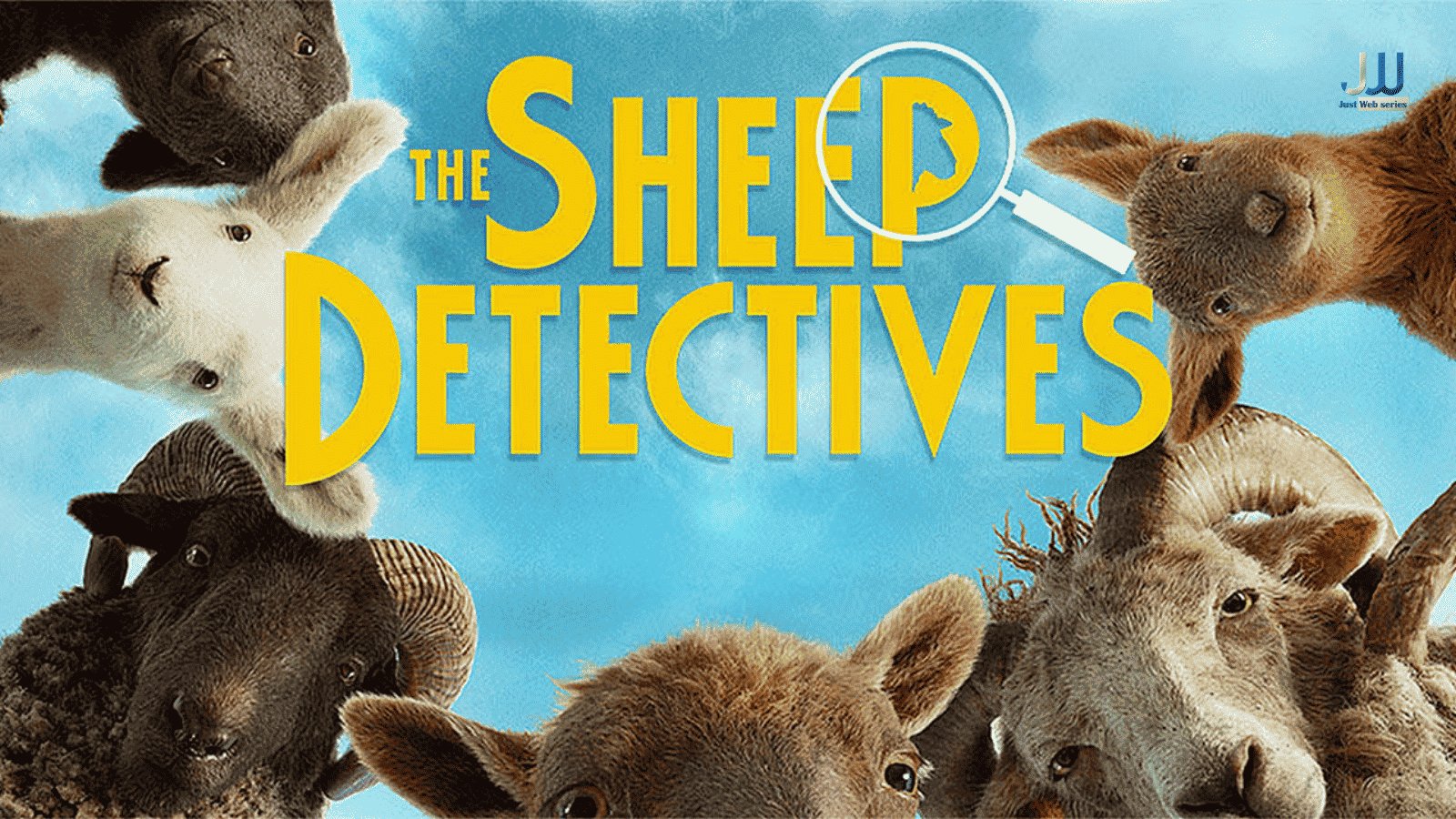

If you just finished the sheep detectives movie and found yourself staring at the screen trying to piece together exactly when the clues were hidden in plain sight, you’re not alone. The film drops a villain reveal that works precisely because the movie spends its entire runtime making you look everywhere else. By the time the truth lands, you might even feel slightly embarrassed for not catching it sooner. That’s the sign of a well-constructed mystery.
The Sheep Detectives ending explained, in the most direct way possible: the reporter who spent the whole film “helping” solve George Hardy’s murder is the one who committed it. Elliot Matthews doesn’t exist. He’s Peter Van Vuren – George’s estranged son, who poisoned his own father, forged a will to frame his sister, and then inserted himself into the investigation to make sure she took the fall. The motive is the oldest one in mystery fiction: money.
But what makes this ending stick isn’t just the whodunit answer. It’s what Kyle Balda and writer Craig Mazin do with grief in those final scenes and the quiet, genuinely moving image of a little winter lamb being welcomed into a flock by a sheep who finally accepted that you can’t solve your way out of loss. This article breaks it all down, scene by scene.
The Sheep Detectives Ending Explained in Short: George Hardy is murdered by his estranged son Peter Van Vuren, who disguised himself as a reporter named “Elliot Matthews” to infiltrate the investigation and frame George’s daughter Rebecca for the crime. The sheep, led by Lily and Mopple, plant paint clues that crack the case when Officer Tim Derry finally connects the blue sheep medicine stain on George’s hand with the yellow hair dye on the fake reporter’s blond hair, which combined to produce the green smear found on the body. Peter is arrested, Rebecca inherits the meadow, and Lily adopts the outcast Winter Lamb, naming him George.
The Setup – A Shepherd, His Flock, and the Stories That Started Everything
George Hardy (Hugh Jackman) is a quiet, gentle shepherd living in the English village of Denbrook who reads murder mystery novels aloud to his flock every night. He believes, slightly absurdly, that his sheep follow along. He’s completely right. The flock, led by the sharp-minded Shetland sheep Lily (Julia Louis-Dreyfus), actually dissects each plot with the thoroughness of a book club. When George is found dead under suspicious circumstances one morning, the town’s only officer, the hapless Tim Derry (Nicholas Braun), is ready to call it a heart attack and move on. The sheep know better.
My take: The setup is deceptively simple, and it works because Mazin doesn’t wink at the audience too much. George is warm and lived-in, Hugh Jackman plays him with an ease that makes his absence genuinely felt rather than just plot-functional. The film positions itself early as something between Babe and Knives Out, and it earns that comparison. The sheep’s nightly debates about the mysteries George reads, arguing about motive and means with complete conviction are the funniest and most quietly clever scenes in the whole film.
If you enjoy mystery films that weaponise genre conventions against your expectations, our Dacoit Ending Explained shows how a Telugu revenge drama pulled off exactly the same trick.
Why this matters: Everything the sheep know about crime-solving comes from George’s stories. His murder becoming their mystery is the engine of the entire film. The trick Mazin pulls is making the sheep’s detective framework simultaneously charming and actually correct, they’re not bumbling through it. They’re good at this.
The Betrayal – What the Will Really Said
After George’s death, a lawyer named Lydia reads the will. George, it turns out, had invented a sheep medication that earned him a $30 million fortune. He was leaving half to his daughter Rebecca Hampstead (Molly Gordon), who lives locally and the other half to his son Peter Van Vuren, who supposedly lives in South Africa. He also left his entire flock to Rebecca. The moment the will is read, the mystery snaps into focus. Two children, one fortune, and the father was recently murdered.
Short answer: The will is the motive. Everything Elliot Matthews does after this scene is about controlling who inherits that money.
My take: This is the scene where the sheep detectives movie reveals its structural confidence. The will reading plays completely straight, no musical sting, no dramatic close-up on a suspicious face. Mazin trusts the audience enough to file the information away and keep moving.
The fact that “Peter” is supposedly in South Africa and therefore conveniently absent is doing a lot of quiet work here. If you’re drawn to mysteries where inheritance drives the violence, The Raikar Case – a compact Indian whodunit, uses the same family-money dynamic to very different effect.
Why this matters: The will reframes the entire cast of suspects. Every interaction Elliot Matthews has with Tim Derry from this point forward is manipulation, he’s steering the investigation away from himself and toward Rebecca.

The Red Herrings – Caleb, Ham, Beth, and the Art of the Misdirect
The film spends considerable time building out Denbrook’s web of suspicious characters. Caleb, a rival shepherd, is being forced off George’s land, his lease terminated. He and the town butcher Ham, it turns out, were planning to acquire George’s sheep specifically to supply a new lamb chop business. Beth (Hong Chau), the local shopkeeper, is caught stealing a letter meant for George and hiding it from Tim. And Reverend Hillcoate hovers in the background with the general air of someone who knows more than he’s letting on.
My take: This is where the sheep detectives movie most resembles an Agatha Christie novel and consciously so. Each secondary character has a real secret, just not the one that matters. The Caleb-Ham subplot is played for dark comedy (they were planning to slaughter sheep, which is appalling to the flock and genuinely funny to the audience), while Beth’s revelation is surprisingly tender. She stole the letter because she had unrequited feelings for George. She gives it to Rebecca eventually and that act of honesty becomes part of the emotional healing.
Why this matters: These red herrings aren’t padding. They’re deliberately seeded so that when Elliot/Peter is revealed, the audience has been so busy suspecting everyone else that they missed the person closest to Tim the entire time. Classic mystery construction.
The Winter Lamb – The Outcast Who Cracked the Case
Among the flock, a young lamb born in winter (voiced by Tommy Birchall) is shunned by the other sheep. Winter lambs, in sheep superstition, are simply off, something to be kept at a distance. Early in the film, the Winter Lamb mentions something the others dismiss entirely: he saw George’s “ghost” standing over the body the night of the murder. Nobody believes him. Later, it’s revealed that what he actually saw was Peter Van Vuren, who looks enough like his father that in the dark, the lamb mistook him for George’s spirit.
Short answer: The Winter Lamb is the film’s most important witness. What he saw wasn’t a ghost, it was the killer.
My take: This is the film’s best hidden clue. The Winter Lamb is established as an unreliable, ostracised figure, of course nobody takes his ghost story seriously. But Mazin plants it early enough that on rewatch, it’s unmissable. It’s also thematically important: the character the flock dismisses and excludes is the one who actually saw the truth. Sebastian (Bryan Cranston), the former underground prize-fighter turned loner sheep, plays a similar role in a different key, and his eventual sacrifice to save Lily is the film’s most unexpectedly devastating beat. For more of that rare thing, a crime drama that earns its emotional sucker punch, our Kohrra Season 2 review covers Netflix’s best mystery of the year so far.
Why this matters: The Winter Lamb’s ghost sighting is the movie’s most elegant planted clue. His later role, sneaking through a jail window to leave a paint message for Tim, gives the outcast his moment of genuine heroism. Lily naming him George at the end closes the circle.
Lily and Mopple – The Detectives Who Actually Solved It
Lily is the flock’s sharpest mind, she’s always the one who figures out whodunit in George’s stories before anyone else. But she has a sheep’s instinctive relationship with grief: forget anything unpleasant within three seconds. Mopple (Chris O’Dowd) is the opposite, he remembers everything. Together, they become the actual investigative engine of the film, planting clues for Tim rather than solving the case themselves, because sheep can’t exactly file a police report. Cloud (Regina Hall), the glamorous, vain North Country Cheviot provides running commentary and spectacular comic relief throughout.
My take: Julia Louis-Dreyfus makes Lily genuinely moving without ever losing the comedic sharpness. The tension between her compulsive need to forget and Mopple’s compulsive need to remember is a beautifully constructed odd-couple dynamic. Chris O’Dowd’s Mopple carries enormous emotional weight in the quiet moments, his insistence that forgetting George would be wrong is essentially the film’s moral thesis statement.
Cloud’s parting credit-roll line – “I still think it’s the maid” is perfectly in character and earns a genuine laugh. If you enjoyed how this film plants its comic voices so precisely that the punchline lands with more weight, you’ll find a similar dynamic in our Cocktail 2 Ending Explained, where character voice was doing all the heavy lifting in the climax too.
Why this matters: Lily and Mopple’s partnership is what transforms the sheep detectives movie from a premise into an actual film with emotional stakes. Their investigation runs parallel to Tim’s and feeds directly into the climax.
The Final Twist – The Sheep Detectives Ending Explained in Full
Short answer: Elliot Matthews is Peter Van Vuren, George’s estranged son. He poisoned his father to prevent the fortune going to Rebecca, forged a new will to give her a motive, and then posed as a reporter to steer Tim’s investigation toward arresting her.
The sheep decode the green stain on George’s hand, its blue sheep medicine mixed with yellow hair dye from Peter’s blond disguise and get that information to Tim just before he ships Rebecca off for prosecution.
Here’s the full breakdown. George was inside his trailer mixing his blue-tinted sheep medication when Peter arrived and poisoned his drink. George fought back and in the struggle, grabbed Peter’s hair. But Peter had dyed his hair blond. The yellow dye transferred onto George’s hand, which was already stained blue from the medicine. Blue plus yellow equals green. The mysterious green substance on George’s body, visible from the moment the corpse is discovered, is the smoking gun. It just takes the entire film to understand what it means.
Lily figures this out partly through logic and partly through a ghostly conversation she has with George, the film earns that scene because it never positions George’s ghost as literal, just as Lily’s grief giving shape to memory. She remembers the green tint. She and Mopple recruit the Winter Lamb to sneak through a jail window and leave a paint message: blue and yellow lines that converge into green. Tim sees it the next morning, almost dismisses it, then notices the sheep following him as Rebecca is being escorted away. He stops. He connects it.
Tim realises Elliot Matthews doesn’t exist. Peter Van Vuren dyed his hair blond, assumed a fake identity, showed up in Denbrook, shared a poisoned drink with his father, and then inserted himself into the investigation he committed. He also forged a new version of the will to make it look as though Rebecca stood to inherit everything, giving her both motive and opportunity in the official record. A near-perfect frame job, undone by a paint-stained lamb and a sheep who never forgot.
Peter is arrested. Rebecca is freed.

What Really Happened: Grief, Innocence, and the Limits of the Mystery Novel
The easiest way to describe what the sheep detectives movie is actually about: it’s a film about coming-of-age, except the ones coming of age are adult sheep who have never had to confront the fact that death is permanent.
The flock exists in a state of collective innocence. They believe sheep turn into clouds when they die. They can will themselves to forget anything painful within seconds. George’s nightly murder mysteries are, for them, safe – the detective always solves it, order is restored, the story ends. When George dies, the sheep initially apply the same framework: if they can just solve the mystery, something will be restored.
What Lily comes to understand and this is the film’s real emotional payload, is that solving the mystery doesn’t bring George back. The investigation keeps them tethered to him. But the solution is just the solution. Grief doesn’t resolve like a plot point.
Sebastian’s death reinforces this. He sacrifices himself to protect Lily from Caleb’s dogs, and Lily has to sit with that loss without the buffer of forgetting. By the climax, she has accepted something the sheep’s entire cultural mythology was designed to prevent: that the people you love become memories, and that carrying those memories forward is not the same as losing them.
This is also why the Winter Lamb becoming “George” matters so much. It’s not a cheap resurrection metaphor. It’s Lily choosing, consciously, to bring a new life into the tradition of care that George built – naming him after the shepherd is an act of continuation, not denial.
Rebecca’s Choice and What the Meadow Means
With Peter arrested and her name cleared, Rebecca could simply take the money and leave. Instead, she takes ownership of the meadow and the flock. She forces Caleb and Ham out after learning they were planning to use George’s sheep for their lamb chop business. She uses George’s own guide to shepherding to learn the work. In the film’s final scene, she sits down to read to the flock, just as George did every night.
My take: Rebecca’s arc is the human throughline that the sheep story mirrors. She arrives in Denbrook as a woman who didn’t know her father, discovers she was framed by a brother she’d never met, and ends up inheriting not just land and money but an obligation, a flock that needs stories read to them every night. It’s a quietly radical choice the film doesn’t over-explain. She doesn’t do it because of the $30 million. She does it because she understands, by the end, what George was building out there in that meadow.
Why this matters: The film closes on Rebecca reading to the flock, Lily introducing the Winter Lamb George to his new family, and Lily catching sight of a cloud that looks like Sebastian. Three endings stacked in ninety seconds. It earns all of them.
Is There a Post-Credit Scene in The Sheep Detectives?
No traditional post-credits scene but stick around through the credits anyway.
At the very end of the credits roll, Cloud gets the last word: “I still think it’s the maid.” That’s it. No sequel tease, no hidden lore drop, no character cameo. Just Cloud, the film’s most perfectly realised comic voice, refusing to accept the verdict.
The film’s main narrative has a genuinely warm and complete conclusion, and this credit sting doesn’t contradict it, instead simply reminds audiences that Cloud, ever the contrarian, was never entirely sold on the official verdict. Given Regina Hall’s delivery throughout the film, it’s the perfect button.
If you’re watching on Amazon Prime Video, you might be tempted to skip out after the main ending. Don’t. Cloud’s parting shot is about fifteen seconds long and completely worth it.
Why The Sheep Detectives Movie is Worth Your Time on Amazon Prime Video
Here’s the thing about the sheep detectives movie that the premise threatens to obscure: this is a genuinely well-constructed mystery. Not a “family mystery” that uses the genre loosely, but a proper whodunit with planted clues, misdirection, a satisfying reveal, and an emotional throughline that earns its ending. The green-stain clue is visible in the film’s first act. The Winter Lamb’s ghost sighting is planted early enough that it rewards rewatching. The false will and the fake identity are pulled off without cheating.
Craig Mazin, who also wrote Chernobyl and The Last of Us, which should give you some sense of the dramatic range here, wrote this script nearly a decade before it was filmed, and the film reflects that. He described the screenplay as “a very pure story” that emerged without significant meddling and that purity shows in every scene.
Critics have called it “the year’s sweetest surprise,” and the film holds a 95% score on Rotten Tomatoes, officially Hugh Jackman’s highest-rated movie ever.
The comparisons to Knives Out and Babe are both accurate and slightly undersell it. It’s funnier than most pure comedies and more affecting than most family films. The voice cast – Julia Louis-Dreyfus, Bryan Cranston, Chris O’Dowd, Regina Hall, Patrick Stewart, Bella Ramsey, Brett Goldstein, brings an embarrassment of comic timing to the sheep ensemble, and the film is smart enough to let them run.
The Sheep Detectives was released on Amazon Prime Video on June 24, 2026, and it’s already sitting at number two on Prime Video’s global chart. It’s the rare film that works as a mystery, as a comedy, and as a quiet meditation on grief and memory. If you found yourself looking up “the goat detective movie” or “winter lamb movie” trying to find it by memory, this is the one.
The Sheep Detectives Ending Explained – Final Verdict
George Hardy was killed by his son Peter Van Vuren, who spent the entire film pretending to help solve his own crime. The sheep caught him. The green stain did him in. Rebecca inherited the meadow, and Lily gave the Winter Lamb a name.
The film’s ending is bittersweet rather than fully sad – George is gone, and the film never cheapens that loss with forced optimism. But the flock survives, stays together, and continues the traditions he created. That’s the emotional payoff the sheep detectives movie earns, not a tidy resolution, but a continuation.
The Sheep Detectives is streaming now on Amazon Prime Video. If you’re looking for more mystery-comedy that plays it this smart, check out our roundup of the best Knives Out-style films on OTT. And if you’re still thinking about the goat detective movie or winter lamb and wondering if this is the same film – it is, it’s this one, and it’s worth every minute.
Frequently Asked Questions (FAQs)
Who killed George Hardy in The Sheep Detectives?
Peter Van Vuren, George's estranged son, killed him by poisoning his drink. Peter was operating under the fake identity "Elliot Matthews" - a reporter who inserts himself into Tim Derry's investigation to frame his sister Rebecca for the murder.
What is the green substance on George Hardy's hand?
The green stain is the film's smoking gun. George's blue sheep medication mixed with the yellow hair dye from Peter's blond disguise during their struggle. The Winter Lamb uses blue and yellow paint to recreate this colour combination as a clue for Tim Derry, who finally understands it just in time to stop Rebecca being wrongly prosecuted.
What is the Winter Lamb's role in The Sheep Detectives ending?
The Winter Lamb, an outcast shunned by the flock is the film's key witness and unlikely hero. He saw Peter at the murder scene but described it as "George's ghost." He later sneaks into the jail to leave paint clues that crack the case. At the film's end, Lily adopts him and names him George, completing her arc of grief into continuation.
Who voices the sheep in The Sheep Detectives?
The sheep are voiced by Julia Louis-Dreyfus (Lily), Bryan Cranston (Sebastian), Chris O'Dowd (Mopple), Regina Hall (Cloud), Patrick Stewart (Sir Richfield), Bella Ramsey (Zora), and Brett Goldstein (the twin sheep Reggie and Ronnie).
Is The Sheep Detectives worth watching on Prime Video?
Yes. It's one of the best-reviewed films of 2026, a mystery that works as an actual mystery, with a cast that's having the time of their lives, and an emotional ending that sneaks up on you. It's the kind of film that gets described as a "family movie" but plays just as well for adults watching alone. Don't let the sheep premise fool you.





 Netflix
 Prime Video
 JioHotstar
 SonyLIV
 ZEE5
ZEE5 MX Player