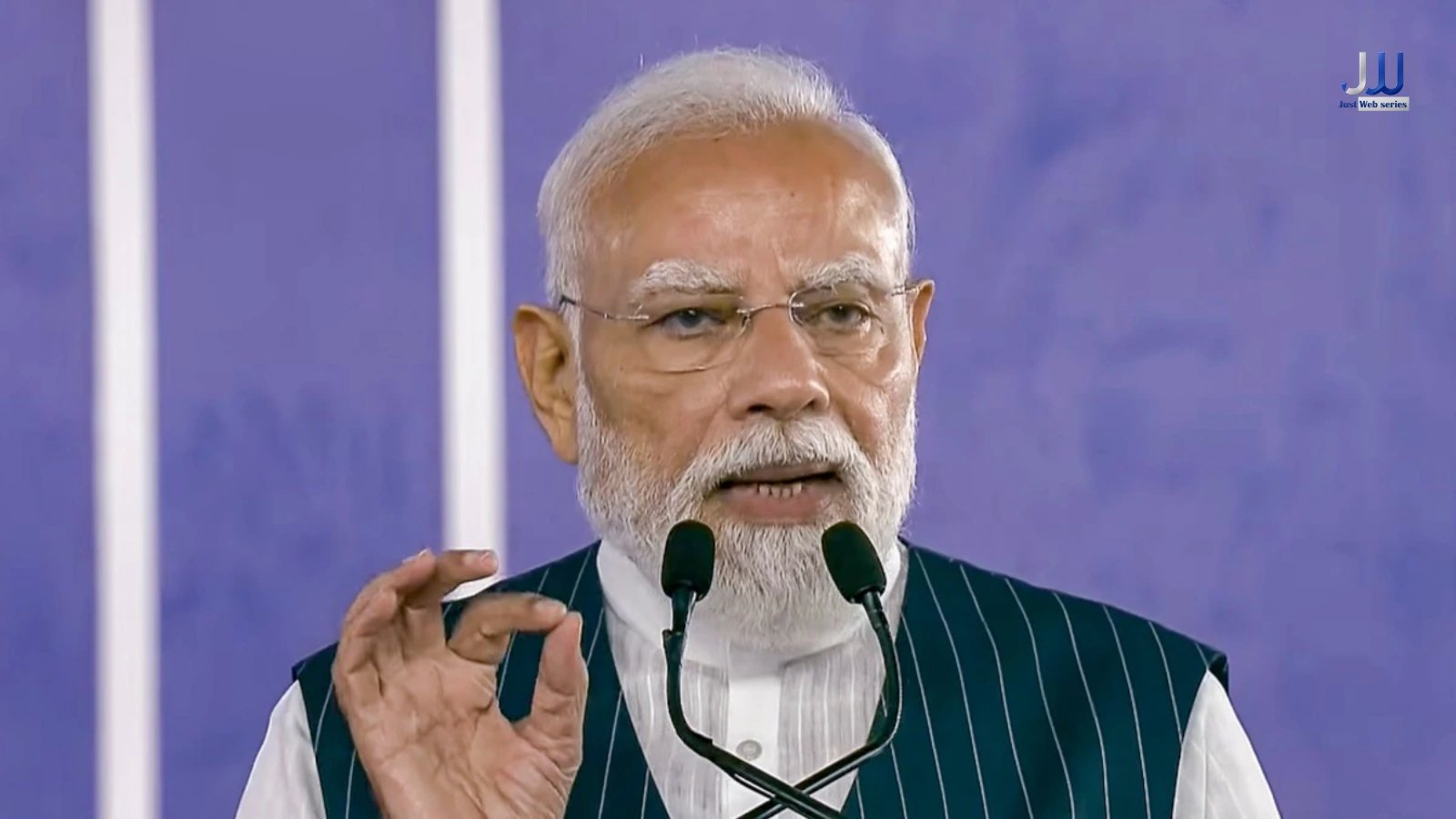

PM Modi fast-track courts paper leak, that’s the phrase that’s been sitting at the top of my feed since Thursday morning, and honestly, I couldn’t scroll past it. I usually write about web series finales and OTT drama, but this week the biggest cliffhanger isn’t on Netflix or JioHotstar, it’s on the streets of Delhi.
When I saw PM Modi’s post announcing fast-track courts for those involved in paper leaks, my first thought was: is this the fix students have been begging for, or is it a headline built to calm a crisis that’s already spiralling?
I sat with the news for a full day before writing this, and I want to walk you through exactly what was said, why it happened now, and where I personally land on it.
What Did PM Modi Actually Announce?
On Thursday, Prime Minister Narendra Modi pledged to set up fast-track courts to punish those involved in examination paper leaks, marking his first public response to the youth-led protests that have been challenging his government.
In his post on X, he framed the youth’s future as a non-negotiable priority and said strict action would follow anyone found responsible for compromising exam integrity. He also directed authorities to begin the groundwork immediately.
This is the core of the PM Modi fast-track courts paper leak plan, a judicial mechanism meant to speed up prosecution in paper-leak cases instead of letting them drag through India’s already backlogged court system for years.
In a post on X (formerly Twitter), the Prime Minister said that the future of India’s youth is a top priority and stressed that anyone found guilty of leaking examination papers or helping organize such scams would face strict legal action.
He emphasized that the government would not tolerate any attempt to undermine the dreams of students and directed the concerned ministries and officials to begin the process of implementing the new judicial mechanism without delay.
The proposed PM Modi fast-track courts paper-leak plan is aimed at ensuring that cases related to exam leaks are heard and decided much faster than under the regular judicial process. At present, many such cases remain tied up in courts for years because of heavy case backlogs, allowing accused individuals to remain out on bail while investigations continue.
By creating dedicated fast-track courts, the government hopes to speed up investigations, trials, and convictions, sending a strong message that those responsible for cheating students and compromising the integrity of public examinations will face swift punishment.
The announcement also reflects the government’s attempt to restore confidence in India’s examination system. Over the past few years, several high-profile paper leak incidents involving recruitment exams and entrance tests have triggered widespread protests, with students demanding stricter laws, quicker investigations, and accountability from officials responsible for conducting examinations.
Many candidates have argued that repeated cancellations and delays have not only wasted years of preparation but have also caused significant financial and emotional stress.
With the promise of fast-track courts, the Centre is signalling a tougher stance against organized exam fraud. Whether the new system succeeds will depend on how quickly these courts are established, how efficiently investigations are conducted, and whether the judicial process delivers timely justice for the millions of students whose careers have been affected by paper leak scandals.
Why Now? The Protests Behind the Announcement
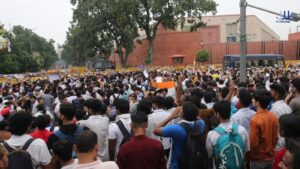
This announcement didn’t come out of nowhere. Demonstrations have grown across New Delhi after reported irregularities in national medical school entrance exams, escalating into a security crackdown this week, with protesters occupying Parliament Street for three days, the same road that connects Parliament House to Connaught Place.
The group leading these protests, referred to in reports as the CJP, has been demanding the resignation of Education Minister Dharmendra Pradhan, alongside accountability for the exam failures that triggered this unrest.
If you want the full context on India’s biggest ongoing OTT news and current affairs coverage, our News section has been tracking related stories as they break.

The Human Cost Behind the Numbers
This is part of the story that stopped me from being mid-scrolled. According to reporting on the protests, the CJP’s demands include dropping cases against peaceful demonstrators and financial assistance of roughly 10 million rupees (about $120,000) for the families of each of at least 12 students who died by suicide following recent exam cancellations.
Twelve young lives. That number alone tells you why “fast-track courts for exam paper leak India” isn’t just a policy phrase trending on X, it’s a demand born out of genuine grief and frustration from students who feel like the system failed them at the most important moment of their academic lives.
According to reports on the ongoing protests, the Chhatra Juba Parishad (CJP) has put forward several key demands. These include withdrawing cases filed against peaceful student protesters, ensuring a fair and transparent investigation into the alleged paper leak incidents, and providing financial assistance of ₹1 crore (10 million rupees) to the families of each of the at least 12 students who reportedly died by suicide following recent examination cancellations and recruitment-related setbacks.
The demand for compensation is intended not only as financial support but also as a public acknowledgment of the immense emotional and psychological toll that repeated exam disruptions have taken on students and their families.
Many aspirants spend years preparing for competitive examinations, often relocating to coaching hubs, taking loans, or relying on their families’ savings.
When an examination is cancelled because of a paper leak, candidates are forced to repeat the preparation process, face uncertainty about revised schedules, and compete again after months of waiting.
Student groups argue that the repeated cycle of paper leaks, cancellations, and delayed recruitment has created widespread frustration and anxiety among job seekers.
They say that many young people have begun to lose faith in the fairness of the examination system, particularly when investigations and court proceedings take years to conclude.
This is one of the key reasons protesters are demanding faster judicial action against those responsible.
Fast-Track Courts: What They’re Actually Meant to Do
For anyone unfamiliar with the term, fast-track courts are special judicial benches designed to resolve specific categories of cases faster than regular courts, usually by dedicating fixed timelines, reduced adjournments, and priority scheduling. In theory, applying this model to paper leak cases means the following:
- Faster framing of charges against accused individuals
- Reduced years-long delays that currently let cases lose public attention
- A quicker, more visible deterrent for anyone planning to leak future exam papers
- A message to students that the system is finally taking their frustration seriously
This is why the fast-track courts for the exam paper leak India conversation have picked up so much traction this week; people want to know if this changes anything on the ground or if it’s simply a court renamed with urgency.
Reactions: Support vs Skepticism
Not everyone is convinced; CJP spokesperson Ashutosh Ranka dismissed the fast-track courts proposal as insufficient to address the underlying systemic failures, calling the announcement a distraction rather than a real solution</cite>, and pointed to what he called incompetence in handling the exam system itself.
On the other side, Union Minister J.P. Nadda has invited stakeholders for dialogue and urged activist Sonam Wangchuk, who has been on a hunger strike over the issue, to join the mainstream conversation instead, with the government signaling it is open to a longer parliamentary discussion on paper-leak prevention.
So, you’ve got two camps here:
- Those who see this as real institutional reform: a concrete legal mechanism the government has never formally committed to before.
- Those who see it as damage control: timed exactly when protests were escalating into a crackdown, without addressing the root cause: how papers keep leaking in the first place.
Will Fast-Track Courts Actually Fix the Paper Leak Problem?
Here’s where I’ll be honest with you: fast-track courts punish people after a leak has already happened. They don’t stop the leak itself. Real prevention would mean fixing the exam paper printing, transport, and digital security chain, the actual points where leaks originate. Punishment is a deterrent, not a firewall.
That’s likely why states are also moving independently. Maharashtra, for instance, has already been working on its own law to curb paper leaks during its legislative session, showing that this isn’t just a Delhi-centric issue; it’s a nationwide credibility crisis for India’s examination system.
So, will this specific Modi paper leak announcement reaction translate into visible change for the NEET paper leak fast-track court verdict cases already pending? That depends entirely on execution: how fast these courts are actually formed, staffed, and given real cases to hear.
My Honest Take
I’ll say this plainly: as someone who writes about entertainment for a living, I don’t usually wade into political announcements.
But this story crossed over because it’s genuinely about youth, the same audience that reads reviews on this site, binges show on the weekend and is also sitting for competitive exams during the week.
When 12 students die by suicide over exam cancellations, that’s not a side headline. That deserves real attention, and I think the announcement is a step, not a solution. It buys the government time and shows intent, but the CJP’s core demand, accountability, not just speed, hasn’t been addressed yet.
If you’re following India’s biggest trending stories alongside your OTT updates, check out our Entertainment News hub and OTT News section for more real-time coverage.
Conclusion
The PM Modi fast-track courts paper leak announcement is a real, tangible policy move, not just a soundbite, but it lands in the middle of a much bigger, more painful story about India’s exam system and the students paying the price for its failures.
Whether this becomes a meaningful reform or another headline that fades in a news cycle depends on what happens next: how fast these courts are built, and whether the government addresses the accountability questions the protesters are still asking.
I’ll be tracking this story as it develops, because some stories matter far beyond the entertainment beat.
FAQs
What exactly did PM Modi announce about paper leaks?
PM Modi announced that the government will set up fast-track courts to ensure swift and stringent punishment for those involved in paper leaks.
Why are there protests happening right now over paper leaks?
Protests grew across New Delhi after reported irregularities in national medical entrance exams, with demonstrators occupying Parliament Street for three days.
What does the CJP want besides fast-track courts?
The group has demanded the education minister’s resignation, dropped cases against peaceful protesters, and financial compensation for families of students who died by suicide after exam cancellations.
Are fast-track courts a new concept in India?
No — fast-track courts already exist for other categories of crime in India. This announcement extends the model specifically to paper-leak cases.
Will fast-track courts stop future paper leaks?
Not directly. They speed up punishment after a leak occurs but don’t fix the security gaps in exam-paper printing, storage, and transport that cause leaks in the first place.





 Netflix
 Prime Video
 JioHotstar
 SonyLIV
 ZEE5
ZEE5 MX Player