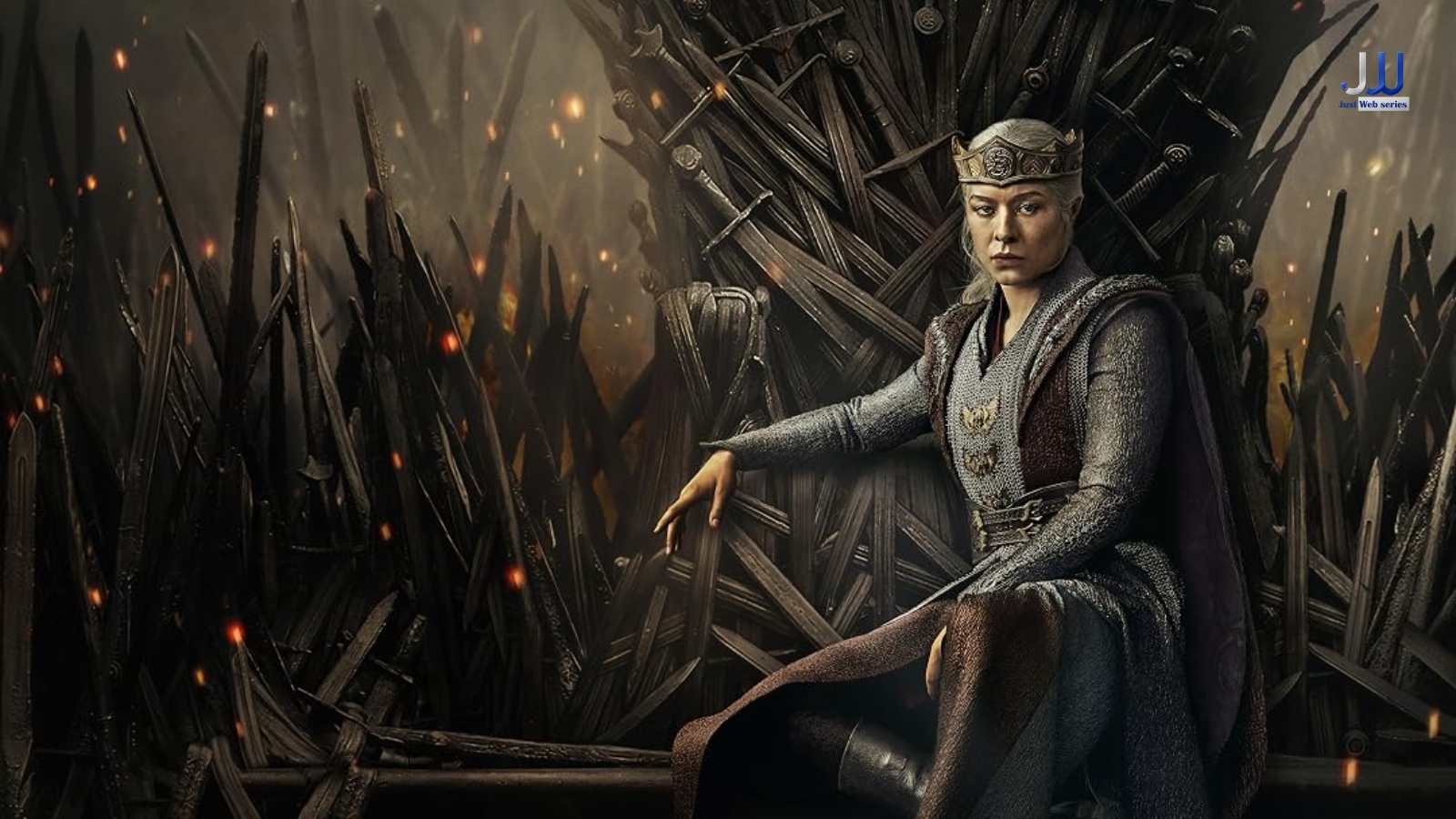

House of the Dragon Season 3 Finale Ending Explained, that’s the question dominating search results since episode 8 aired, and for good reason. The 70-minute finale packs in a devastating character death, a speech that reframes Rhaenyra’s entire arc, and a final image that changes the direction of the show heading into its last season.
If the Battle of Tumbleton left you with more questions than answers, this breakdown covers every major beat.
This recap is based on a close viewing of the episode, cross-checked against George R.R. Martin’s Fire & Blood, to explain what happened, why it matters, and where it leaves Rhaenyra and the rest of Westeros heading into the final season.
What Happens in the House of the Dragon Season 3 Finale?
The Season 3 finale is built around the Battle of Tumbleton, and it’s easily the most brutal hour the show has produced. The finale sets up an unimaginably bleak fourth and final season, as Rhaenyra’s grip on power starts to slip while the gods throw in a nasty twist: Aegon and his dragon Sunfyre are still alive.
That single reveal changes everything for the Greens, who thought their king was finished after the injuries he suffered earlier in the war.

On the ground, the battle itself is chaos. Ulf, one of Rhaenyra’s dragonseed riders, had been quietly courted by Ormund Hightower’s side after feeling disrespected by Daemon and Rhaenyra, and he eventually turns his dragon against Daemon’s forces mid-battle.
It’s a betrayal that had been building several episodes, and its payoff in the finale is one of the more effective plot resolutions of the season.
Meanwhile in King’s Landing, Rhaenyra is dealing with a crisis of a completely different kind — one that ends up defining the entire House of the Dragon Season 3 finale ending far more than the battle does.
Who Dies in the House of the Dragon Season 3 Finale? The Shocking Death Explained
This is the part everyone’s searching for, so let’s get straight into it. The biggest, most heartbreaking casualty of the finale isn’t a battlefield death, it’s Helaena Targaryen. After Rhaenyra’s men force-feed Helaena during her hunger strike, it becomes the final straw, and Helaena jumps from her bedroom window off camera.
Upon returning to the Red Keep from the sept, Rhaenyra discovers that Helaena has taken her own life, a moment that longtime readers of Fire & Blood had been bracing for, but that still lands as devastating on screen.

What makes this House of the Dragon Season 3 finale death hit so hard is the character it happens to. Helaena has consistently been written as the gentlest, most tragic figure in the entire Targaryen family, and her arc essentially ends with her realizing she’ll always be a prisoner of the throne, one way or another.
Beyond Helaena, the Battle of Tumbleton racks up a horrifying body count of its own. Named and unnamed casualties pile up as scores of soldiers, and even civilians die by blade, arrow, boiling oil, and dragonfire.
On the named-character front, Ormund Hightower doesn’t walk away clean either, he’s badly wounded in hand-to-hand combat during the fighting at the battlements.
The final shot of the episode says almost as much as the dialogue does. Rhaenyra is left staring at Helaena’s tapestry, and the way the camera lingers on her face makes it clear something inside her has shifted, and not for the better.
What Is Rhaenyra’s “Prince That Was Promised” Speech About?
If you’re trying to understand the House of the Dragon Season 3 finale ending in full, you can’t skip Rhaenyra’s speech outside the Sept of Baelor. It’s arguably the single biggest gamble the show has made all season.
Years earlier, after naming Rhaenyra about his heir, Viserys had confided in her a prophecy passed down from Aegon to the Conqueror called “A Song of Ice and Fire,” warning of a coming darkness that only a united Westeros could defeat.
In the finale, with news breaking that Aegon and Sunfyre are alive and threatening her claim, Rhaenyra makes a striking, high-risk move: she publicly declares herself the Prince That Was Promised in front of a stunned crowd of smallfolk.
This is a major deviation from the source material; Fire & Blood never mentions this Ice and Fire prophecy being revealed publicly, and there’s no record of Rhaenyra making a declaration like this in the books.
That’s a deliberate choice by the showrunners, and it reframes from Rhaenyra’s entire arc for the final season. Rather than a calculated queen playing a long political game, she now looks like a ruler who may genuinely be unraveling under the weight of the crown. Echoes of Daenerys Targaryen’s descent in Game of Thrones are impossible to miss here.
For anyone who watched the original series, this moment is loaded. It sets up the exact prophecy that plays out generations later, and it tells us that whatever “truth” Rhaenyra believes about herself, the smallfolk watching her that day is far from convinced.
That becomes crucial in the finale when Rhaenyra learns that Aegon II and Sunfyre are still alive, creating another serious threat to her claim. Instead of keeping the prophecy secret or using it privately to justify her decisions, she takes an extraordinary step.
Standing before the smallfolk outside the Sept of Baelor, Rhaenyra publicly presents herself as the figure connected to the ancient prophecy — effectively claiming the identity of the Prince That Was Promised.
And this is where the scene becomes uncomfortable.
Rhaenyra isn’t speaking to a council of nobles who understand Targaryen history. She is speaking to ordinary people who have already suffered because of the civil war. They don’t necessarily know about Viserys’ secret, the Targaryen prophecy or the supposed destiny surrounding the royal family.
To them, Rhaenyra’s declaration can easily sound like a desperate ruler trying to convince people that she has been chosen by fate.
That ambiguity is what makes the scene work for me. Does Rhaenyra genuinely believe she is fulfilling a sacred responsibility, or is the pressure of the war beginning to convince her that she is something more than a political claimant?
How Many Dragons Are Left After the Season 3 Finale?
Dragon losses are a big part of why, when people talk about the House of the Dragon Season 3 Finale Ending Explained in detail, the numbers always come up first. This finale feels so consequential heading into the last season precisely because of what it costs both sides in the air.
Between the Battle of Rook’s Rest earlier in the season and the Battle of Tumbleton in the finale, the Targaryen civil war, the Dance of the Dragons, has burned through a significant chunk of the family’s aerial firepower on both sides.
With Ulf’s betrayal, Ormund’s forces gaining a rider, and Aegon’s return with Sunfyre, the balance of dragon power going into Season 4 has shifted significantly in favor of the Greens compared to where Season 3 started. This finale marks the point where the numbers stop favoring Rhaenyra’s Blacks.
Finale Set Up for House of the Dragon Season 4
Every major thread left open in the finale points toward one thing: total, unrestrained war. Here’s what’s on the table heading into the last season.
- Aegon and Sunfyre are back in play; the Greens now have a resurrected king and dragon nobody expected to see again this season.
- Rhaenyra’s public prophecy claim has permanently changed how the smallfolk of King’s Landing view her, and not in her favor.
- Helaena’s death removes one of the last neutral, sympathetic voices from the Targaryen family, leaving both sides more ruthless.
- Ulf’s betrayal signals that dragonseed loyalty is fragile, and Rhaenyra can no longer assume her makeshift riders will hold the line.
- Alicent’s failed attempt on Aemond leaves that relationship and Aemond’s trajectory, dangerously unresolved.
Showrunner Ryan Condal has been vocal that the finale was built as a deliberate bookend to the season opener, pairing the Battle of the Gullet with the Battle of Tumbleton as the two biggest set pieces the show has ever attempted.
That scale is only going up from here, Season 4 has been confirmed as the show’s final season, which means everything set up in this finale is designed to pay off, not linger.
When Will House of the Dragon Season 4 Release?
HBO has confirmed Season 4 as the final chapter of the series, but as of now there’s no official release date.
Given the production timelines for the previous seasons, a realistic expectation is sometime in 2027 or later, though HBO hasn’t locked that in publicly yet. This section will be updated once an official announcement is made.
If you want more breakdowns like this one, our Hollywood entertainment news section covers every major HBO and streaming update as it happens, and you can browse our full House of the Dragon and fantasy series reviews for deep dives on every episode this season. We’re also tracking every confirmed upcoming series dropping later this year if you need something to fill the wait, and our series reviews hub has the full Season 3 episode-by-episode coverage if you missed anything before the finale.
Conclusion
The House of the Dragon Season 3 finale ending doesn’t just close out a season, it fundamentally changes how Rhaenyra is positioned going into the endgame.
Between Helaena’s death, Aegon’s return, and a prophecy speech that makes Rhaenyra appear more desperate than divine, Season 4 has significant consequences to resolve, and few of them point toward a peaceful outcome.
Share your own predictions for where Rhaenyra’s story goes from here in the comments below.
FAQs
Who dies in the House of the Dragon Season 3 finale?
The biggest death is Helaena Targaryen, who takes her own life after being force-fed during her hunger strike. The Battle of Tumbleton also claims a large number of soldiers and civilians on both sides.
What does Rhaenyra's "Prince That Was Promised" speech mean?
Rhaenyra publicly declares herself the prophesied savior from Aegon the Conqueror’s “Song of Ice and Fire” prophecy — a moment that doesn’t exist in the books and reframes her as a ruler who may be losing her grip on reality.
Is Aegon II actually alive at the end of Season 3?
Yes. The finale confirms Aegon and his dragon Sunfyre survived, setting up a direct threat to Rhaenyra’s rule heading into Season 4.
Whose side is Ulf on by the end of the finale?
Ulf betrays Rhaenyra and Daemon during the Battle of Tumbleton, turning his dragon against the Blacks after feeling disrespected earlier in the season.
Will there be a House of the Dragon Season 4?
Yes, Season 4 has been confirmed as the final season, though HBO has not announced an official release date yet.




 Netflix
 Prime Video
 JioHotstar
 SonyLIV
 ZEE5
ZEE5 MX Player