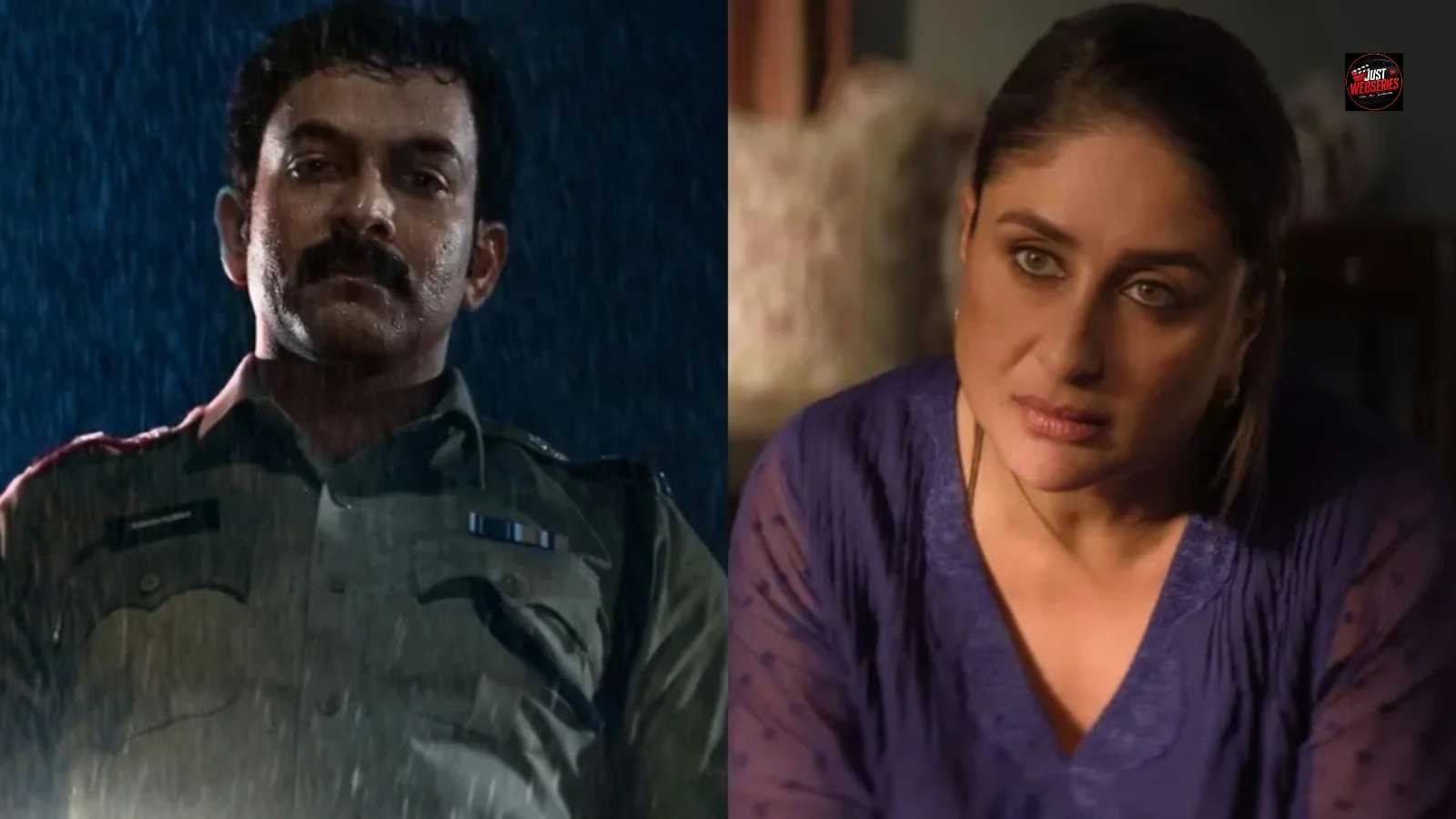

Daayra Movie Review, that’s what half of Twitter (or X, if you’re being formal about it) has been typing into Google since the film hit theatres on 18 September 2026, and I get why. I walked into this Meghna Gulzar film expecting the kind of tight, morally uncomfortable crime drama she’s known for, and for a good ninety minutes, that’s exactly what I got.
Then the film lost its nerve. This Daayra Movie Review is my honest, first-person take, no spoilers dumped in your lap without warning, no inflated praise because the trailer looked good, and no pretending the ending worked when it didn’t.
If you’re searching for a straight answer before you book tickets, here it is: Daayra is worth watching for Kareena Kapoor Khan and Prithviraj Sukumaran alone, but go in knowing the back half sags. Let’s get into the full Daayra Movie Review, cast, story, ending, and box office breakdown.
What Is Daayra About? (Plot Summary)
Daayra literally translates to “boundary” or “circle,” and that’s the film’s whole thesis — where does the law’s boundary end and personal justice begin? The story opens with a missing-person case: a young woman named Ragini (played by Pragati Mishra) vanishes from a highway.
Her mother, Parvati (Kshitee Jog), and younger brother, Kabir (Bhavesh Babbani), go to the police, who initially brush off the complaint.
The next day, Ragini’s burnt body is discovered on a deserted stretch of road. The case explodes across news channels, and the local police force, the fictional Teerthana department, comes under massive public pressure.
DCP Raman Kumar (Prithviraj Sukumaran) is handed the investigation, and within days his team arrests four men connected to the crime. Before the accused can even be produced in court, all four are shot dead.
The official version: an escape attempt gone wrong. The public celebrates. A section of civil society, however, alleges it was a staged encounter killing, and that’s where the film’s real story begins.
A Special Investigation Team, led by DCP Ajooni Kohli (Kareena Kapoor Khan), is assigned to find out the truth behind the encounter.
What follows is less a whodunit and more a “who’s right”, Raman, who believes some criminals forfeit their right to a trial, or Ajooni, who believes the law’s process matters more than public sentiment, however satisfying vigilante justice might feel.
Ajooni Kohli Enters the Investigation
To determine what actually happened during the encounter, a Special Investigation Team is formed. The investigation is led by DCP Ajooni Kohli, played by Kareena Kapoor Khan.
Ajooni’s job is not simply to accept the police department’s official explanation. She has to examine the evidence, reconstruct what happened and determine whether the encounter was a legitimate police action or a staged killing.
Her investigation puts her directly at odds with Raman Kumar.
Raman represents one side of the central debate. His approach is shaped by the belief that certain criminals can become so dangerous that strict legal procedure may appear inadequate in the face of public anger and the severity of their alleged crimes.
Ajooni, meanwhile, represents the other side of the argument. For her, the law cannot simply be ignored because society is angry or because an accused person is suspected of committing a horrific crime.
The Real Conflict Is Between Raman and Ajooni
This is what makes Daayra more than a conventional murder mystery. Instead of simply asking the audience to identify the killer, the film builds its central conflict around two opposing ideas of justice.
Raman’s position focuses on the result: dangerous suspects are eliminated, and people feel that justice has been delivered.
Ajooni’s investigation focuses on the process: even people accused of terrible crimes are supposed to face the legal system, and police action must remain within the boundaries of the law.

This creates the film’s biggest moral dilemma. If a person is accused of a brutal crime, does society have the right to celebrate their death before a court determines their guilt? And if the police believe they are protecting the public, how far can they go before their actions cross the boundary of lawful justice?
Daayra Movie Review: Cast and Performances
Any Daayra Movie Review Kareena Kapoor Prithviraj Sukumaran search exists because this is the first time these two have shared a screen, and it’s genuinely the film’s biggest draw.
- Kareena Kapoor Khan as DCP Ajooni Kohli: Controlled, unglamorous, and completely convincing as an officer who investigates “incidents, not colleagues.” This is one of her more restrained performances in years, and it works.
- Prithviraj Sukumaran as DCP Raman Kumar: Carries the emotional weight of a cop who genuinely believes he did right by a grieving family. He doesn’t play Raman as a villain, which is exactly why the character lands.
- Kshitee Jog as Parvati: A small but affecting role as the victim’s mother; her scenes hit harder than most of the courtroom drama around them.
- Kanwaljit Singh, Achint Kaur, Anuja Sathe, Seema Azmi: Solid supporting turns, though the screenplay doesn’t give most of them enough room to register as full characters.
This Daayra movie cast and story combination is strong on paper, and for the first half, the film uses it well.
First Half vs Second Half: Where Daayra Works and Where It Doesn’t
This is the part every Daayra Movie Review seems to agree on, and I’ll say it plainly: the first half is genuinely gripping. Meghna Gulzar (working from a screenplay by Yash Keswani, Sima Agarwal, and herself) sets up a real moral dilemma instead of a manufactured one.

The references to legal reforms following real-world cases of custodial and encounter violence give the film a grounded, “this could actually happen” quality. Ajooni’s early line about investigating “incidents, not colleagues” tells you everything about who she is in one sentence, that’s efficient writing.
Post-interval, the film loses that discipline. The pacing stretches, a few plot turns get genuinely confusing, and the moral complexity that made the first half compelling gets replaced by more conventional investigation-thriller beats.
It’s not that the second half is badly made, the production values stay consistent throughout, it’s that the screenplay seems unsure of how to escalate a story that had already made its point so clearly in act one.
Daayra Movie Ending Explained
Let’s talk about the part most people are actually searching for: the Daayra movie ending explained. Without spelling out every beat for those who haven’t watched it yet, the climax is where this film’s ambition and its execution part ways the most.
After building an intense debate about due process versus instant justice for two hours, the resolution arrives in a way that feels rushed rather than earned. Multiple reviewers (and I agree) have pointed out that the climax “loses steam” right when it needed to land its biggest punch.
You spend the whole film waiting for a gut-punch moral reckoning, and instead you get a conclusion that ties things up too neatly and too quickly, given everything that came before it.
This is really the film’s core problem: Daayra asks a genuinely difficult question- is a staged encounter ever justified when the system is slow and the crime is monstrous? and then doesn’t fully commit to sitting in the discomfort of that question until the end.
Direction, Writing, and Technical Aspects
Meghna Gulzar has built a career on handling difficult, real-world-adjacent subjects (her filmography includes stories rooted in real events), and her instincts for staging serious, restrained drama are visible throughout Daayra.
The cinematography favors muted, procedural tones over stylized action, which suits the subject matter. Where the film stumbles is in screenplay discipline, a strong premise deserved a second half as tightly written as the first.
Daayra Box Office Collection: Opening Buzz
On the Daayra box office collection front, early trade reports going into release week pointed to limited pre-release buzz compared to some of the year’s bigger crime-thriller releases.
Trade watchers have noted that Daayra will likely depend heavily on positive word-of-mouth from multiplex audiences in its first few days rather than opening-weekend hype, since it doesn’t have a big commercial hook beyond its cast pairing and subject matter.
I’d recommend checking official trade sources like Sacnilk or Box Office India for verified day-wise numbers as they update, I’m not going to throw out unverified crore figures here just to fill a paragraph.
Should You Watch Daayra? My Verdict
Here’s my final call in this Daayra Movie Review: 3 out of 5. Watch it for Kareena Kapoor Khan and Prithviraj Sukumaran’s performances and for a genuinely thought-provoking first half.
Temper your expectations for the second half and the climax, the film raises a sharp, uncomfortable question about justice and then doesn’t quite have the nerve to follow it all the way through.
It’s a decent one-time watch, not the modern crime-drama classic its opening act promises.
Quick Rating Breakdown:
- Performances: 4/5
- Direction: 3.5/5
- Screenplay (first half): 4/5
- Screenplay (second half & climax): 2/5
- Overall: 3/5
Conclusion
Daayra had every ingredient to be one of 2026’s most talked-about crime dramas: a director known for handling difficult subjects with care, two heavyweight lead performances sharing the screen for the first time, and a premise that asks a real, unresolved question about justice in India.
It gets the setup right. Where this Daayra movie review has to be honest with you is the execution of the back half, a stretched second act and a climax that pulls its punches keep this from being the film it clearly wanted to be.
Watch it for Kareena Kapoor Khan and Prithviraj Sukumaran, stay for the first half’s tension, and just don’t expect the ending to fully deliver on the film’s own promise.
Did you watch Daayra this weekend? Drop your own verdict in the comments, and check out our latest Bollywood news and upcoming movies list for what’s releasing next.





 Netflix
 Prime Video
 JioHotstar
 SonyLIV
 ZEE5
ZEE5 MX Player