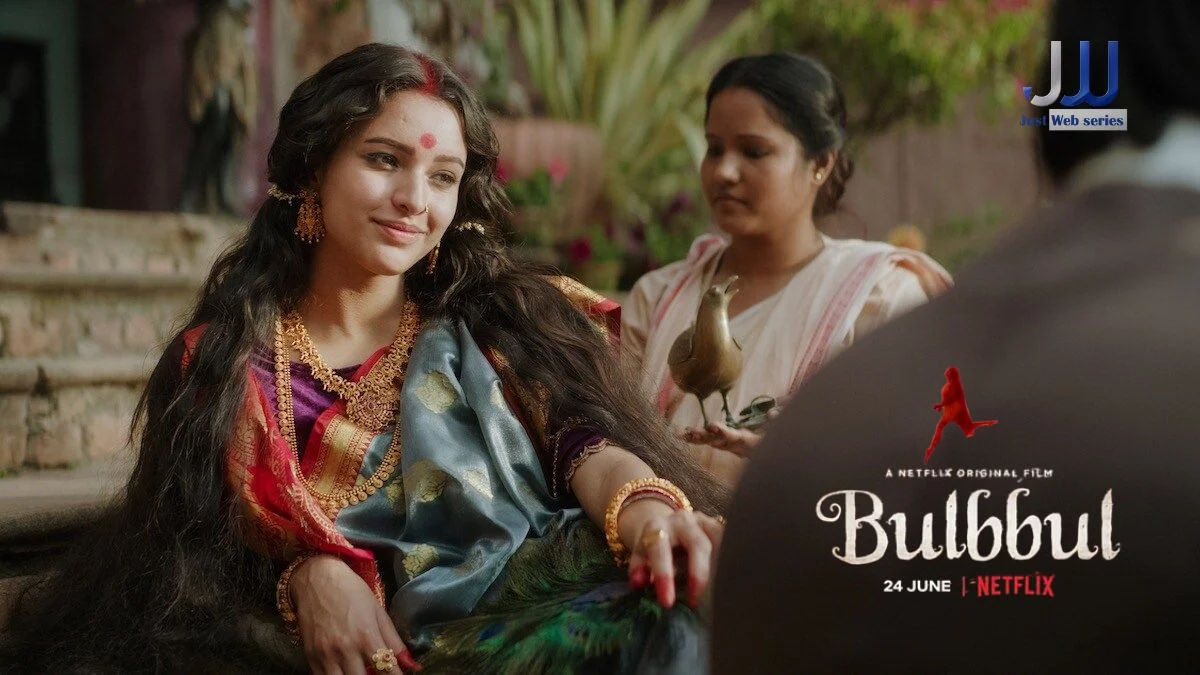

Bulbbul Review: Years after its release, Bulbbul is still unsettling viewers in unexpected ways. The Netflix original Hindi horror-drama film premiered on 24 June 2020. Directed by Anvita Dutt and produced by Anushka Sharma, the film stars Tripti Dimri, Avinash Tiwary, and Rahul Bose in key roles.
The film continues to trend years after its release due to its haunting visuals, feminist storytelling, and unique take on Indian folklore.
Bulbbul Release Date
Bulbbul premiered on June 24, 2020 globally, directly on Netflix.
Since then, the movie has remained a popular choice among fans of psychological horror and dark period dramas.
Even in 2026, it continues to gain traction among new viewers discovering it on OTT platforms.
Where to Watch Bulbbul
If you’re wondering where to watch Bulbbul, the film is available exclusively on Netflix.
It is part of Netflix India’s original film lineup and can be streamed with a subscription.
The movie is also available for offline download, making it easily accessible for Indian audiences.
Bulbbul Cast
The Bulbbul cast features a strong ensemble that adds depth to the haunting narrative:
- Tripti Dimri as Bulbbul
- Avinash Tiwary as Satya
- Rahul Bose (dual role)
- Paoli Dam as Binodini
- Parambrata Chatterjee as Dr. Sudip
Tripti Dimri’s performance, in particular, received widespread praise for portraying innocence, pain, and power in one character.
What is Bulbbul About?
Set in late 19th-century Bengal, Bulbbul tells the story of a young girl married off as a child bride into a wealthy household.
As she grows older, Bulbbul transforms into a mysterious and powerful woman who presides over the household. Meanwhile, a series of brutal murders in the nearby forest sparks rumors of a “chudail” (witch) haunting the village.
The film blends folklore with psychological trauma, gradually revealing how Bulbbul’s past shapes her present.
At its core, the story explores:
- Patriarchy and gender oppression
- Trauma and transformation
- Revenge and justice
It’s not just a horror film, it’s a dark feminist fable wrapped in gothic storytelling.
Bulbbul Review: Tripti Dimri’s Performance in Bulbbul
Tripti Dimri doesn’t play Bulbbul in a conventional sense, she inhabits her, letting the character evolve quietly rather than announcing every shift. What begins as a wide-eyed child bride slowly turns into a figure of eerie control, and the transition is so fluid that you almost don’t notice when innocence gives way to something far more unsettling.
Instead of relying on dramatic outbursts, she leans into stillness; lingering glances, controlled smiles, and silences that say more than dialogue ever could. This restraint works brilliantly in a film that thrives on mood and suggestion.
There’s also a duality she maintains throughout: fragile yet untouchable, human yet almost mythical. In several moments, you’re unsure whether to sympathize with her or fear her and that ambiguity is where her performance truly shines.
In scenes where she barely speaks, her presence alone shifts the tone, turning Bulbbul into a haunting presence rather than just a character, and leaving a lasting imprint that goes beyond the genre itself.
Anushka Sharma as the Producer
With Bulbbul, Anushka Sharma’s role as a producer goes beyond just backing the project, her influence is visible in the film’s tone and choices. Instead of treating it like a conventional horror film, the narrative leans heavily into mood, symbolism, and a distinctly feminine gaze, something rarely explored in the genre.
The decision to keep the storytelling restrained and visually poetic rather than loud or jump-scare driven, reflects a clear creative direction. From the saturated reds to the almost theatrical framing of scenes, the film feels curated rather than manufactured.
More importantly, Bulbbul fits into a pattern of projects where she prioritises perspective over formula. The film avoids explaining itself, trusting the viewer to sit with discomfort, something rare in mainstream OTT horror.
Why Bulbbul is Trending in 2026
Even years after its Bulbbul OTT release, the film continues to trend and here’s why:
- Strong Feminist Narrative
The film uses horror as a metaphor for oppression, turning the “chudail” trope into a symbol of resistance. - Stunning Visual Aesthetic
Its red-toned cinematography and dreamlike sequences make it visually unforgettable. - Rediscovery via reels & shorts
Clips and aesthetic edits went viral again in 2026, ending up in gaining a new audience for the film. - Tripti Dimri’s Rising Popularity
With her growing fame, viewers are revisiting Bulbbul as one of her breakout performances.
Latest Updates (April 2026)
As of April 2026, there’s no official sequel update for Bulbbul, but the film has seen a noticeable resurgence on Netflix.
This renewed interest is driven by rediscovery through recommendations, rising attention around Tripti Dimri, and ongoing conversations around feminist horror.
More importantly, its continued popularity highlights a shift toward mood-driven, visually rich storytelling, helping Bulbbul stay relevant well beyond its release.
About the Film – Bulbbul
Genre: Horror, Supernatural Drama
Release Year: 2020
OTT Platform: Netflix
Director: Anvita Dutt
Producers: Anushka Sharma, Karnesh Sharma
Production House: Clean Slate Filmz
Lead Cast: Tripti Dimri, Avinash Tiwary, Rahul Bose, Paoli Dam, Parambrata Chatterjee
Runtime: Approx. 94 minutes
Best Netflix Movies Like Bulbbul (Horror & Folklore Picks)
If you enjoyed Bulbbul’s mix of atmospheric horror, folklore, and layered storytelling, here are 5 similar films available on Netflix that offer a comparable vibe:
1. Qala
- Release Year: 2022
- Genre: Psychological Drama, Mystery
- Director: Anvita Dutt
- Why Watch: From the same creator as Bulbbul, this film explores trauma, ambition, and mental health with haunting visuals and a gothic tone.
2. Pari
- Release Year: 2018
- Genre: Supernatural Horror
- Director: Prosit Roy
- Why Watch: Produced by Anushka Sharma, this film blends dark folklore with a chilling narrative around a mysterious woman and supernatural forces.
3. Ghost Stories
- Release Year: 2020
- Genre: Horror, Anthology
- Directors: Anurag Kashyap, Zoya Akhtar, Dibakar Banerjee, Karan Johar
- Why Watch: A collection of eerie tales with psychological and supernatural elements, perfect for fans of unconventional horror.
4. Apostle
- Release Year: 2018
- Genre: Folk Horror, Thriller
- Director: Gareth Evans
- Why Watch: Set in 1905, this chilling tale follows a man who travels to a remote island to rescue his sister from a dangerous cult. Much like Bulbbul, it blends folklore with disturbing truths, offering a visually striking yet deeply unsettling experience.
5. Incantation
- Release Year: 2022
- Genre: Supernatural Horror, Found Footage
- Director: Kevin Ko
- Why Watch: One of the scariest folk-horror films on the platform, it revolves around a mother trying to protect her daughter from a curse rooted in religious taboo. Its immersive storytelling and cultural horror elements echo Bulbbul’s haunting impact.
Frequently Asked Questions (FAQs)
- When was Bulbbul released?
The film was released on June 24, 2020.
- Where can I watch Bulbbul?
You can stream it on Netflix.
- Is Bulbbul a web series or movie?
It is a Netflix original movie.
- Is there a sequel to Bulbbul?
No sequel has been announced yet.
- Is Bulbbul worth watching?
Yes, especially if you enjoy artistic and symbolic storytelling.
- Suggest movies like Bulbbul or from same genre
Qala, Ghost Stories and Pari are available in Hindi on Netflix and On the other hand, Apostle and Incantation are international films based on the same genre as Bulbbul.
- Is Bulbbul scary or psychological?
It is primarily psychological, focusing more on atmosphere and symbolism than jump scares.
- What does the ending of Bulbbul mean?
The ending represents Bulbbul as a symbol of justice and transformation rather than just a supernatural entity.
- Is Bulbbul based on folklore?
Yes, it is inspired by Indian folklore, particularly the legend of the “chudail.”
Final Verdict
Bulbbul doesn’t chase jump scares, it creates a mood that slowly unsettles you. The film leans on imagery and silence, turning a familiar folklore setup into something more layered and quietly disturbing.
Driven by Tripti Dimri’s controlled, haunting presence and shaped by Anushka Sharma’s distinct production approach, it feels crafted rather than formulaic.
Years after its Bulbbul release date, it still draws viewers in, it doesn’t try to scare you, it makes sure you don’t forget it.


 Netflix
 Prime Video
 Hotstar
 JioCinema
 SonyLIV
 ZEE5
ZEE5 MX Player